
Luthier's Choice: The Professional-Grade Adhesive for Guitar Neck Repair
In the precise world of luthiery and instrument repair, the integrity of the neck joint is paramount. A failed repair can compromise an instrument's tone, playability, and value. That's why professionals worldwide rely on a specific, high-performance adhesive system designed for this critical task. Our Neck Bond 2000 Series is engineered to meet the exacting demands of guitar neck repair, offering a permanent, stable, and sonically transparent bond. It is widely regarded as the best glue for guitar neck repair in workshops and factories, setting the standard for strength, reversibility, and clean application.
Product Overview
The Neck Bond 2000 Series is a specialized, high-tack aliphatic resin adhesive formulated specifically for wood-to-wood joints in musical instruments. Unlike standard wood glues, its formulation balances exceptional tensile strength with a controlled, longer open time, allowing for perfect alignment of the neck and heel. It cures to a rigid, crystal-clear line that transmits vibration efficiently without damping, preserving the instrument's natural acoustic properties. This product is the cornerstone of professional repair kits and production lines for electric, acoustic, and bass guitars.
Key Features
- Acoustically Transparent Bond: Cures hard and rigid to ensure optimal energy transfer across the neck joint for superior sustain and tonal clarity.
- Controlled Open Time: Provides a 10-15 minute working window for precise positioning and clamping, eliminating rushed repairs.
- Reversible with Heat: A critical feature for future repairs; bonds can be safely released with controlled heat application (approx. 150°F/65°C), protecting the wood.
- High Gap-Filling Strength: Exceeds ASTM D905 shear strength standards for wood, creating a joint stronger than the surrounding timber, even with minimal perfect fits.
- Non-Staining & Sandable: Dries clear and can be easily sanded and finished over without telegraphing through stains or clear coats.
- Low Creep & High Tack: Exhibits minimal movement under constant string tension and develops immediate tack to hold pieces in place during clamping.
Technical Specifications
| Property | Specification | Test Standard |
|---|---|---|
| Type | Aliphatic Resin (Yellow/Type II) | ANSI/HPVA Type II |
| Color (Wet/Dry) | Light Tan / Transparent Amber | Visual |
| Open Time @ 72°F (22°C) | 10-15 minutes | ASTM D2339 |
| Clamp Time | 30-60 minutes (minimum) 24 hours (full cure) |
Manufacturer's Recommendation |
| Shear Strength (Hard Maple) | > 3,500 psi | ASTM D905 |
| Service Temperature | -20°F to 180°F (-29°C to 82°C) | - |
| VOC Content | < 350 g/L | EPA Method 24 |
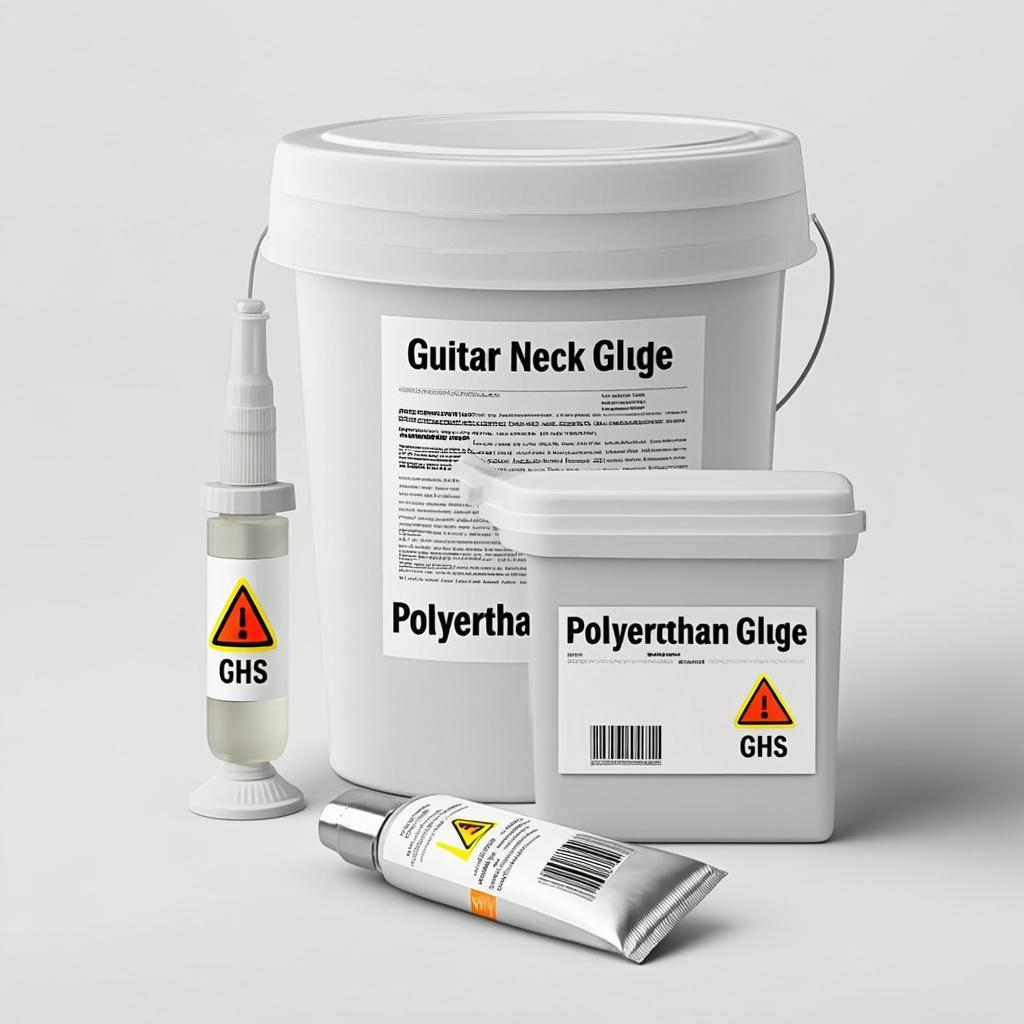
| Packaging | 1-gallon Jug, 1-pint Bottle, 4-oz. Bottle | - |
Application Scenarios
This adhesive is the definitive solution for a range of critical structural repairs in fretted instruments:
- Headstock Breaks: The classic angled headstock fracture on Gibson-style guitars, requiring a strong, gap-filling, and reversible bond.
- Neck Reset Procedures: For resetting acoustic guitar necks into the body's dovetail or mortise, where clean-up and future serviceability are key.
- Heel & Neck Joint Cracks: Repairing separations at the neck-to-heel or neck-to-body joint on bolt-on, set-in, and through-neck designs.
- Lamination & Splice Repairs: Re-gluing delaminated multi-piece necks or scarf joints with precision and strength.
- Fretboard Regluing: Securing a lifting fretboard without compromising fret level or finish.
Advantages Over Generic Wood Glues
Choosing a specialized adhesive like Neck Bond 2000 is what separates a professional repair from an amateur fix. Here’s why it outperforms standard PVA or hide glues:
- Superior Stability: Resists "creep" under the constant 150-200 lbs of tension from guitar strings, where many white PVAs will slowly deform.
- Professional Clean-Up: Excess glue forms a rubbery, peelable skin that is easily removed with a chisel or damp cloth before fully curing, unlike messy white glues.
- Thermal Reversibility: Allows for future repairs without destroying vintage wood, a non-negotiable feature for high-end restoration work.
- Optimized Viscosity: Thicker than typical PVAs, it stays in the joint without running into fret slots or binding cavities.
Why Choose Our Adhesive for Your Business
As a B2B supplier, we understand that your reputation depends on the materials you use. Partnering with us provides tangible benefits for your workshop or manufacturing operation.
- Consistent, Batch-Tested Quality: Every shipment meets the same high specifications, ensuring predictable results and workflow efficiency for your technicians.
- Bulk & Custom Packaging: We offer cost-effective bulk containers for high-volume shops and convenient small bottles for individual repair kits or retail.
- Technical Support & SDS: Access to comprehensive technical data sheets (TDS), safety documentation (SDS), and direct support from our product specialists.
- Industry Trust: Our adhesive is specified by major instrument manufacturers and used in leading repair schools, making it a trusted standard you can recommend with confidence.
- Global Logistics: Reliable international shipping and export documentation to support your supply chain, wherever you are located.
By standardizing with the best glue for guitar neck repair, you invest in fewer call-backs, higher customer satisfaction, and a stronger brand reputation for quality craftsmanship.
Frequently Asked Questions (FAQ)
Is this glue really reversible?
Yes. A primary reason it is considered the best glue for guitar neck repair is its reversible nature. Applying gentle, controlled heat (using a heating pad or specialized heating blanket) to the joint will soften the adhesive, allowing the neck to be separated without damaging the wood fibers. This is essential for future repairs or adjustments.
What is the ideal clamping pressure?
Firm, even pressure is key—enough to squeeze out a thin, continuous bead of glue, but not so much that you starve the joint. 100-150 psi is a common target. Use cauls and proper clamping cauls to distribute pressure evenly across the entire glue surface.
How should surfaces be prepared before gluing?
All old adhesive must be completely removed to expose fresh, clean wood. Surfaces should be flat, well-fitted, and free of oil, dust, or finish. A dry clamp-up to check alignment and pressure points is highly recommended before applying glue.
Can it be used on other instrument repairs?
Absolutely. While optimized for guitar necks, it is excellent for any structural wood joint in luthiery, including cello and violin neck repairs, crack repairs in soundboards, and bridge regluing on certain instruments.
What is the shelf life, and how should it be stored?
Unopened, the adhesive has a shelf life of 2 years from the date of manufacture. Once opened, ensure the lid is sealed tightly and store in a cool, dry place. Avoid freezing. We stamp all containers with a manufacture date for your reference.