
Introduction
Solid plastic wheels represent a crucial component in a wide array of material handling, industrial, and consumer applications. Positioned as a cost-effective and versatile alternative to traditional metallic or pneumatic wheels, they are integral to the functionality of carts, dollies, conveyors, and various mobile equipment. The core performance characteristics center around load capacity, wear resistance, rolling resistance, and chemical compatibility. While offering advantages in non-marking applications and reduced noise levels, understanding the material limitations and engineering considerations is paramount for optimal performance and longevity. This guide provides a comprehensive technical overview of solid plastic wheels, encompassing material science, manufacturing processes, performance parameters, failure modes, and relevant industry standards.
Material Science & Manufacturing
The dominant materials utilized in the production of solid plastic wheels are Polypropylene (PP), Polyethylene (PE), Polyurethane (PU), Nylon (Polyamide 6 & 66), and Acrylonitrile Butadiene Styrene (ABS). PP and PE offer excellent chemical resistance and low cost, but exhibit lower load-bearing capacity and temperature resistance. Nylon, particularly PA6 and PA66, provide superior strength, abrasion resistance, and temperature stability, making them suitable for heavier-duty applications. PU represents a balance between these properties, offering high load capacity, elasticity, and wear resistance, though at a higher cost. ABS provides a good balance of impact resistance, rigidity, and processability.
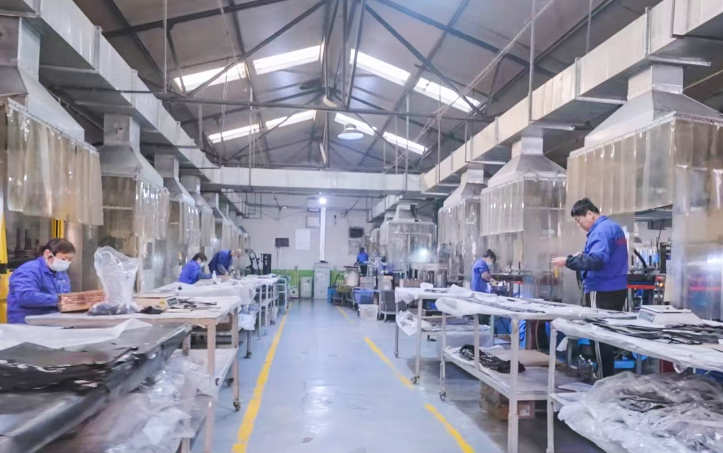
Manufacturing processes commonly employed include injection molding and compression molding. Injection molding is prevalent for high-volume production of complex geometries, utilizing precise temperature and pressure control to ensure dimensional accuracy and material homogeneity. The process involves melting plastic granules and injecting them into a mold cavity, followed by cooling and ejection. Key parameters include melt temperature, injection pressure, holding pressure, and cooling time. Compression molding, conversely, is used for larger, simpler shapes and involves placing a pre-determined amount of plastic material into a heated mold cavity and applying pressure until the material flows and conforms to the mold shape. Ultrasonic welding may be used for joining plastic wheel components, ensuring a strong and reliable bond. Post-molding operations may include deburring, surface finishing, and quality control inspections to verify dimensional tolerances and material integrity. The molecular weight distribution of the polymer significantly impacts the mechanical properties; higher molecular weight generally correlates with increased strength and toughness. Additives like glass fiber reinforcement are commonly incorporated into nylon wheels to enhance stiffness and reduce creep deformation under load.
Performance & Engineering
The performance of solid plastic wheels is dictated by several key engineering considerations. Load capacity is a primary factor, determined by the material’s yield strength, wheel diameter, and wheel width. A larger diameter and wider wheel generally increase load capacity. Force analysis under static and dynamic loading conditions is critical to ensure structural integrity and prevent premature failure. Coefficient of friction is important for determining rolling resistance and ease of movement, influenced by material type and surface finish. PU wheels typically exhibit lower rolling resistance compared to nylon or polypropylene. Environmental resistance is also vital. Prolonged exposure to UV radiation can cause degradation of PP and PE, leading to embrittlement and reduced mechanical properties. Chemical compatibility is crucial; certain plastics are susceptible to swelling or degradation upon contact with specific solvents, oils, or acids. For example, nylon can absorb moisture, affecting its dimensional stability and mechanical strength.
Compliance requirements vary depending on the application. For food processing applications, materials must comply with FDA regulations for food contact safety. For medical applications, biocompatibility and sterilization requirements must be met. Static dissipation is important in environments prone to electrostatic discharge (ESD), requiring the use of conductive plastics or coatings. The Shore hardness (durometer) of the plastic material influences the wheel’s ability to absorb shock and vibration; softer materials provide better cushioning but may exhibit lower wear resistance. The hub design and bearing selection are integral to overall performance. Bearing type (ball, roller, sleeve) and lubrication affect rolling friction, load capacity, and maintenance requirements. Finite Element Analysis (FEA) is frequently employed to simulate stress distribution and optimize wheel geometry for specific loading scenarios.
Technical Specifications
| Material | Shore Hardness (D) | Load Capacity (kg) | Tensile Strength (MPa) |
|---|---|---|---|
| Polypropylene (PP) | 60 | 50 | 20 |
| Polyethylene (PE) | 55 | 40 | 15 |
| Polyurethane (PU) | 70 | 150 | 35 |
| Nylon 6 | 80 | 200 | 80 |
| Nylon 66 | 85 | 250 | 90 |
| ABS | 90 | 100 | 40 |
Failure Mode & Maintenance
Solid plastic wheels are susceptible to several failure modes. Wear and abrasion are common, particularly in abrasive environments. This manifests as a reduction in wheel diameter and rounding of edges. Fatigue cracking can occur under cyclic loading, initiated at stress concentration points such as the hub interface or surface imperfections. Creep deformation, especially in nylon wheels, can lead to dimensional changes and reduced load-bearing capacity over time. Environmental degradation, including UV exposure and chemical attack, can cause embrittlement and cracking. Delamination can occur in multi-layer wheels due to inadequate bonding between layers. Oxidation can affect the surface properties of some plastics, leading to discoloration and reduced strength.
Preventative maintenance is crucial. Regular inspection for wear, cracks, and deformation is recommended. Lubricating bearings reduces friction and extends their lifespan. Avoiding overloading the wheels prevents premature failure. Protecting the wheels from prolonged UV exposure and harsh chemicals prolongs their service life. Cleaning wheels regularly removes contaminants that can accelerate wear. In case of minor wear, wheels can be re-profiled using appropriate grinding or machining techniques. If cracks or significant deformation are detected, the wheel should be replaced immediately. Choosing the appropriate material and wheel size for the application, based on load requirements and environmental conditions, is paramount to preventing failures.
Industry FAQ
Q: What is the primary difference between Nylon 6 and Nylon 66 in wheel applications?
A: Nylon 66 generally exhibits higher tensile strength, stiffness, and temperature resistance compared to Nylon 6. However, Nylon 6 is more ductile and has better impact resistance. Nylon 6 also absorbs less moisture than Nylon 66, resulting in greater dimensional stability. The choice depends on the specific application requirements; for heavier loads and high-temperature environments, Nylon 66 is preferable, while for applications requiring greater impact resistance and flexibility, Nylon 6 is often favored.
Q: How does the durometer affect the suitability of a polyurethane wheel for a specific load?
A: A lower durometer (softer PU) provides better shock absorption and conforms to surface irregularities, ideal for delicate loads and uneven surfaces. However, softer wheels wear faster under heavy loads. A higher durometer (harder PU) offers greater load capacity and abrasion resistance but provides less cushioning. The optimal durometer is a balance between these factors, determined by the load weight, surface conditions, and desired ride comfort.
Q: What are the limitations of using polypropylene wheels in outdoor applications?
A: Polypropylene is susceptible to UV degradation, which can lead to embrittlement and cracking upon prolonged exposure to sunlight. It also has a relatively low temperature resistance and can become brittle in cold weather. Furthermore, its lower load capacity compared to nylon or polyurethane limits its use in heavy-duty outdoor applications.
Q: How do I select the appropriate bearing type for a plastic wheel?
A: Bearing selection depends on load, speed, and environmental factors. Ball bearings offer low friction and high speed capability but are sensitive to contamination. Roller bearings can handle higher loads but generate more friction. Sleeve bearings are cost-effective for low-load, low-speed applications. Sealed bearings are recommended for dusty or wet environments. The bearing material should be compatible with the wheel material to prevent corrosion or galvanic reaction.
Q: What is the impact of moisture absorption on the performance of nylon wheels?
A: Nylon is hygroscopic, meaning it absorbs moisture from the surrounding environment. This absorption leads to dimensional changes, reduced stiffness, and decreased tensile strength. The extent of moisture absorption depends on the type of nylon (Nylon 6 absorbs more than Nylon 66) and the ambient humidity. In critical applications, drying the nylon wheels before use or using a moisture-resistant nylon compound may be necessary.
Conclusion
Solid plastic wheels offer a versatile and cost-effective solution for a wide range of mobility applications. The selection of the optimal material – Polypropylene, Polyethylene, Polyurethane, Nylon, or ABS – is dictated by a careful consideration of load capacity, environmental resistance, and specific performance requirements. Proper manufacturing processes, utilizing techniques like injection molding and compression molding, are crucial to ensure dimensional accuracy and material integrity. Understanding potential failure modes, such as wear, fatigue, and environmental degradation, alongside implementing preventative maintenance strategies, is paramount for maximizing wheel longevity and operational efficiency.
Future developments in solid plastic wheel technology will likely focus on incorporating advanced polymer blends, fiber reinforcement, and surface treatments to enhance performance characteristics. The use of bio-based plastics and recycled materials will also become increasingly prevalent, driven by sustainability concerns. Continued refinement of FEA modeling and testing methodologies will further optimize wheel designs for specific applications, ensuring continued innovation and improvement in this essential component of numerous industrial and consumer products.