

Introduction
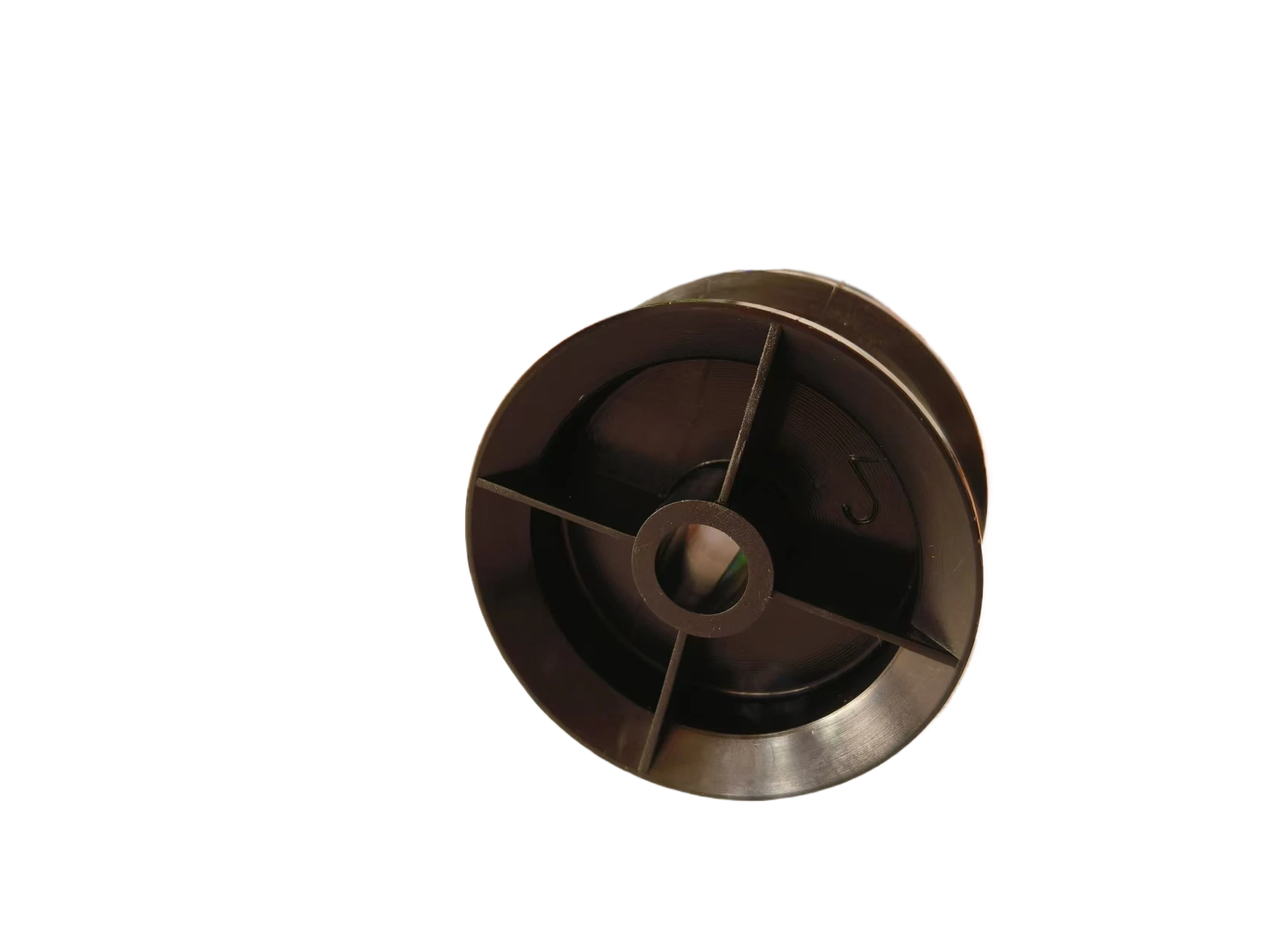
Small plastic pulley wheels are fundamental components in numerous mechanical systems, facilitating power transmission and motion control across diverse industries. Positioned within the broader category of power transmission elements, these pulleys represent a cost-effective solution for applications requiring low to moderate torque transmission. They are distinct from metal pulleys in their material properties, offering advantages in weight reduction, corrosion resistance, and noise dampening. Their primary function involves guiding a flexible element – typically a belt, cord, or cable – around a rotating drum, enabling the transfer of rotational motion. Core performance characteristics include tensile strength, dimensional stability, coefficient of friction, and resistance to wear. Understanding these parameters is crucial for selecting the appropriate pulley for a given application, and ensuring optimal system performance and longevity. The selection process frequently involves balancing cost considerations with the demands of the operating environment and load requirements. Increasingly, material science advancements are expanding the range of available plastics, thereby broadening the potential applications for these components.
Material Science & Manufacturing
The selection of plastic materials for small pulley wheels is dictated by a balance of mechanical properties, cost, and environmental resistance. Common materials include Acrylonitrile Butadiene Styrene (ABS), Polycarbonate (PC), Polypropylene (PP), Nylon (Polyamide – PA6, PA66), and Polyoxymethylene (POM, also known as Acetal). ABS offers a good balance of impact resistance, rigidity, and cost-effectiveness, making it suitable for general-purpose applications. PC boasts superior impact strength and temperature resistance but is typically more expensive. PP is characterized by its low density and excellent chemical resistance, ideal for applications involving corrosive substances. Nylon provides high tensile strength, abrasion resistance, and low friction, commonly used in high-load applications. POM exhibits high stiffness, dimensional stability, and a low coefficient of friction, making it suitable for precision applications.
Manufacturing processes commonly employed include injection molding. This process involves injecting molten plastic into a closed mold cavity, where it cools and solidifies into the desired shape. Critical parameters during injection molding include melt temperature, mold temperature, injection pressure, and cooling time. Precise control of these parameters is essential to minimize defects such as warpage, sink marks, and flash. Other manufacturing methods, less common for high-volume production, include machining from solid plastic stock and thermoforming. Post-processing operations often include deburring, surface finishing (e.g., polishing), and dimensional inspection to ensure conformance to specifications. The mold design itself is critical, impacting cycle time, material distribution, and the overall quality of the finished product. Tooling material (typically hardened steel) must be carefully selected based on the plastic being molded and the anticipated production volume.
Performance & Engineering
The performance of small plastic pulley wheels is governed by several engineering principles. Force analysis focuses on the stresses induced within the pulley material due to belt tension and radial loads. These stresses must remain below the material's yield strength to prevent permanent deformation or failure. The bending moment experienced by the pulley, particularly in cantilevered or overhung configurations, must be carefully considered. Environmental resistance is a critical factor. Exposure to UV radiation, temperature fluctuations, and chemical agents can degrade the plastic material, reducing its strength and durability. Nylon and POM generally exhibit better resistance to these factors than ABS or PP.
Compliance requirements often dictate specific material properties and dimensional tolerances. For example, applications involving food contact may require FDA-compliant materials. RoHS and REACH regulations restrict the use of certain hazardous substances. Functional implementation involves consideration of pulley groove geometry. The groove angle and depth must be optimized to accommodate the belt or cord, preventing slippage and ensuring efficient power transmission. The pulley diameter influences the speed ratio and torque transmission characteristics of the system. Static and dynamic balancing are crucial, particularly at high rotational speeds, to minimize vibration and noise. Finite element analysis (FEA) is frequently used to simulate stress distributions and predict the performance of the pulley under various loading conditions.
Technical Specifications
| Material | Diameter (mm) | Bore Diameter (mm) | Maximum Load Capacity (N) | Coefficient of Friction | Hardness (Shore D) |
|---|---|---|---|---|---|
| ABS | 20 | 5 | 50 | 0.35 | 60 |
| Polycarbonate | 30 | 8 | 150 | 0.40 | 75 |
| Polypropylene | 15 | 4 | 30 | 0.25 | 55 |
| Nylon 66 | 25 | 6 | 200 | 0.20 | 80 |
| POM (Acetal) | 40 | 10 | 300 | 0.15 | 85 |
| ABS | 10 | 3 | 20 | 0.38 | 58 |
Failure Mode & Maintenance
Small plastic pulley wheels are susceptible to several failure modes. Fatigue cracking can occur due to repeated stress cycles, particularly at stress concentration points such as the bore or groove. Creep, the time-dependent deformation under constant load, is more prevalent in thermoplastics at elevated temperatures. Delamination, the separation of material layers, can occur in composite pulleys or due to poor bonding during manufacturing. Degradation from UV exposure leads to embrittlement and reduced strength. Oxidation, particularly in PP, can cause chain scission and loss of mechanical properties. Wear and abrasion are common in high-load applications, leading to dimensional changes and reduced efficiency.
Maintenance primarily involves regular inspection for signs of wear, cracking, or deformation. Lubrication of the pulley bore, if applicable, can reduce friction and wear. Cleaning to remove debris and contaminants is essential. Replacement is recommended when significant wear or damage is observed. Avoiding overloading the pulley, maintaining proper belt tension, and protecting the pulley from harsh environmental conditions can significantly extend its service life. The selection of a compatible belt material is crucial to minimize wear and prevent premature failure. Using appropriate storage conditions, away from direct sunlight and extreme temperatures, is important for preserving the material properties of spare pulleys.
Industry FAQ
Q: What is the primary difference between ABS and Nylon pulleys in terms of load-bearing capacity?
A: Nylon pulleys generally exhibit a significantly higher load-bearing capacity compared to ABS pulleys due to Nylon's superior tensile strength and rigidity. While ABS is suitable for lighter loads, Nylon is preferred in applications demanding greater durability and resistance to deformation under stress.
Q: How does temperature affect the performance of a polypropylene pulley wheel?
A: Polypropylene’s mechanical properties degrade significantly at elevated temperatures. Increased temperature reduces its stiffness and strength, potentially leading to creep or even failure. Therefore, PP pulleys are best suited for applications operating within a moderate temperature range.
Q: What measures can be taken to mitigate UV degradation in outdoor applications?
A: UV degradation can be mitigated by using UV-stabilized plastic formulations, applying a UV-protective coating to the pulley surface, or selecting materials inherently more resistant to UV exposure, such as polycarbonate. Regularly inspecting the pulley for signs of degradation is also crucial.
Q: What is the importance of the pulley groove geometry in relation to belt slippage?
A: Correct groove geometry is critical for preventing belt slippage. An improperly sized or shaped groove can lead to inefficient power transmission, increased wear, and reduced system performance. The groove angle and depth must be matched to the belt profile for optimal engagement.
Q: What are the key considerations when selecting a pulley material for a chemically aggressive environment?
A: When operating in a chemically aggressive environment, material compatibility is paramount. Polypropylene and certain grades of nylon offer excellent resistance to a wide range of chemicals. The specific chemical exposure must be considered to ensure the selected material is not susceptible to degradation or swelling.
Conclusion
Small plastic pulley wheels represent a versatile and cost-effective solution for power transmission in a wide array of mechanical systems. The material selection process requires careful consideration of mechanical properties, environmental factors, and application-specific requirements. Understanding the common failure modes and implementing appropriate maintenance practices are crucial for ensuring optimal performance and longevity. The advancements in plastic material science are continually expanding the capabilities and applications of these components, offering improved performance and durability.
As manufacturing processes continue to refine, injection molding techniques become increasingly precise, contributing to tighter tolerances and improved surface finishes. Future trends are likely to focus on the development of bio-based and recyclable plastics, promoting sustainability and reducing environmental impact. The integration of smart sensors into pulley wheels for real-time monitoring of performance metrics is also a developing area, paving the way for predictive maintenance and optimized system operation.