
Introduction
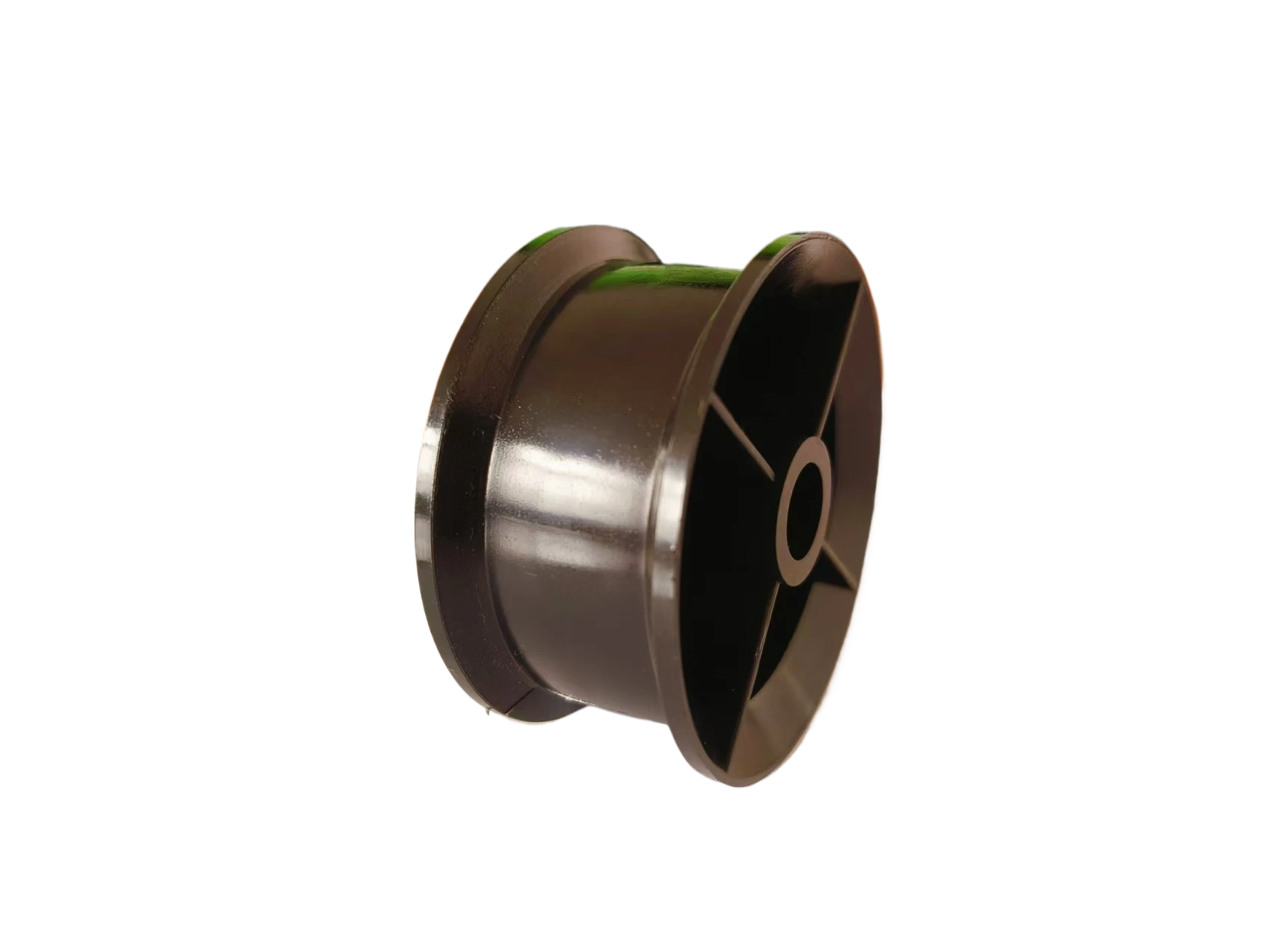
Plastic wheels, encompassing a diverse range of polymers and manufacturing processes, represent a critical component in a vast spectrum of industrial and consumer applications. These applications span material handling equipment (conveyors, carts), robotics, furniture, and increasingly, within the automotive and aerospace sectors as weight-reduction strategies are prioritized. The selection of a plastic wheel is not simply a material choice, but a holistic engineering decision driven by load capacity, operational environment, wear resistance requirements, and cost constraints. This guide offers an in-depth examination of the materials, manufacturing processes, performance characteristics, failure modes, and relevant standards associated with plastic wheel selection and implementation. The industry faces ongoing challenges related to balancing performance with cost, particularly regarding the long-term durability and resistance to chemical degradation of polymeric materials. Furthermore, increasing demand for sustainable materials is driving innovation in bioplastics and recycled polymer formulations, necessitating a thorough understanding of their properties and limitations.
Material Science & Manufacturing
The foundation of any plastic wheel lies in the choice of polymer. Common materials include Polypropylene (PP), Polyethylene (PE), Polyvinyl Chloride (PVC), Polyamide (Nylon), Polyurethane (PU), and Acrylonitrile Butadiene Styrene (ABS). PP and PE are favored for their low cost and reasonable impact resistance, suitable for light-duty applications. PVC provides good abrasion resistance but can become brittle at low temperatures. Nylon offers superior strength, wear resistance, and chemical resistance, making it suitable for heavy-duty and demanding environments. PU is known for its excellent load-bearing capacity and elasticity, often used in applications requiring shock absorption. ABS strikes a balance between cost, toughness, and processability. Manufacturing processes primarily involve injection molding, compression molding, and occasionally, rotational molding. Injection molding is the most prevalent method, offering high precision and repeatability for complex geometries. Key parameters controlled during injection molding include melt temperature, mold temperature, injection pressure, and cooling rate. Precise control of these parameters is critical to minimize warpage, sink marks, and internal stresses which can impact dimensional stability and mechanical performance. The cooling process is particularly crucial as it dictates the crystallinity of the polymer, influencing its strength and resistance to creep. Material properties are also significantly impacted by the inclusion of fillers such as glass fibers, carbon fibers, or mineral reinforcements, which enhance stiffness, strength, and dimensional stability, but can also affect processability and cost.
Performance & Engineering
Performance assessment of plastic wheels requires consideration of several key engineering parameters. Load capacity, determined by the wheel's diameter, material strength, and geometry, is paramount. Finite element analysis (FEA) is routinely employed to model stress distribution under various loading conditions and optimize wheel design. Wear resistance, assessed through abrasion testing (e.g., Taber abrasion test) and impact testing, dictates the wheel’s service life. Environmental resistance is crucial, particularly concerning exposure to UV radiation, temperature extremes, and chemical solvents. UV exposure can cause polymer degradation, leading to embrittlement and loss of mechanical properties. Thermal cycling can induce thermal stresses and dimensional changes. Chemical resistance must be verified through immersion testing, ensuring the polymer does not swell, dissolve, or crack upon contact with relevant chemicals. Coefficient of restitution, a measure of the wheel’s elasticity, is important in applications involving shock absorption or vibration damping. Compliance requirements, such as RoHS (Restriction of Hazardous Substances) and REACH (Registration, Evaluation, Authorisation and Restriction of Chemicals), must be met to ensure product safety and environmental responsibility. Furthermore, dimensional tolerances and surface finish are critical for proper integration with mating components. The wheel’s dynamic behavior, including rolling resistance and noise generation, also needs consideration, especially in applications where efficiency and noise reduction are important.
Technical Specifications
| Material | Load Capacity (kg) | Hardness (Shore D) | Operating Temperature (°C) |
|---|---|---|---|
| Polypropylene (PP) | 50-100 | 60-70 | -20 to 80 |
| Polyethylene (PE) | 40-80 | 50-65 | -40 to 60 |
| Polyvinyl Chloride (PVC) | 75-150 | 75-85 | 0 to 70 |
| Nylon 6/6 | 150-300 | 70-80 | -30 to 100 |
| Polyurethane (PU) | 200-400 | 80-95 | -20 to 90 |
| Acrylonitrile Butadiene Styrene (ABS) | 100-200 | 65-75 | -20 to 85 |
Failure Mode & Maintenance
Plastic wheel failure modes are diverse and dependent on the application and material. Fatigue cracking, initiated by cyclic loading, is a common issue, particularly in wheels subjected to repetitive impacts. Delamination can occur in composite wheels, arising from poor bonding between layers or insufficient fiber wetting. Creep, the time-dependent deformation under constant load, is a concern for polymers with low glass transition temperatures. Oxidation, caused by exposure to oxygen and elevated temperatures, can lead to chain scission and embrittlement. Chemical attack from solvents or corrosive agents can induce swelling, cracking, or dissolution. Wear, resulting from abrasion and friction, leads to dimensional loss and reduced performance. Maintenance strategies include regular inspection for cracks, wear, and deformation. Lubrication of the wheel bearings minimizes friction and extends service life. Proper storage conditions, avoiding exposure to UV radiation and extreme temperatures, are crucial. For wheels subjected to heavy loads or harsh environments, periodic replacement is recommended to prevent catastrophic failure. Failure analysis, employing techniques such as microscopy and chemical analysis, can identify the root cause of failure and inform design improvements.
Industry FAQ
Q: What are the key differences between nylon and polyurethane wheels in terms of abrasion resistance?
A: Polyurethane generally exhibits superior abrasion resistance compared to nylon. While both materials offer good wear characteristics, PU’s higher hardness and elasticity allow it to withstand abrasive forces for a longer duration without significant material loss. However, nylon offers a better resistance to certain chemicals that may degrade polyurethane.
Q: How does temperature affect the load-bearing capacity of polypropylene wheels?
A: Elevated temperatures significantly reduce the load-bearing capacity of polypropylene. PP is a semi-crystalline polymer, and its strength decreases as it approaches its glass transition temperature. Operating above 60°C can lead to substantial deformation and reduced load capacity.
Q: What is the impact of glass fiber reinforcement on the dimensional stability of plastic wheels?
A: Glass fiber reinforcement substantially improves the dimensional stability of plastic wheels. The fibers restrict polymer chain movement, reducing creep and warpage. However, glass fiber can also increase brittleness and potentially affect surface finish.
Q: What testing methods are used to assess the chemical resistance of plastic wheels?
A: Immersion testing is the primary method. Wheels are immersed in various chemicals for specified durations, and changes in weight, dimensions, and mechanical properties are monitored. Additionally, stress cracking resistance tests are conducted to evaluate the wheel’s susceptibility to cracking under chemical exposure.
Q: How can we mitigate the risk of UV degradation in outdoor plastic wheel applications?
A: Incorporating UV stabilizers into the polymer formulation is crucial. These additives absorb UV radiation, preventing polymer chain scission. Coating the wheels with a UV-resistant layer or selecting UV-stabilized grades of polymer can also provide effective protection.
Conclusion
The selection of plastic wheels necessitates a comprehensive understanding of material properties, manufacturing processes, and operational requirements. Balancing cost, performance, and durability is paramount. Nylon and polyurethane remain favored choices for demanding applications, while polypropylene and polyethylene offer cost-effective solutions for lighter-duty tasks. Proper maintenance, including regular inspection and lubrication, is vital to maximize wheel lifespan and prevent premature failure.
Ongoing innovation in polymer science, particularly in the realm of bioplastics and recycled materials, promises to deliver more sustainable and environmentally friendly wheel solutions. Future developments will likely focus on enhancing wear resistance, improving chemical resistance, and optimizing designs for specific applications. Careful consideration of international standards and regulations ensures product compliance and long-term reliability.