
Introduction
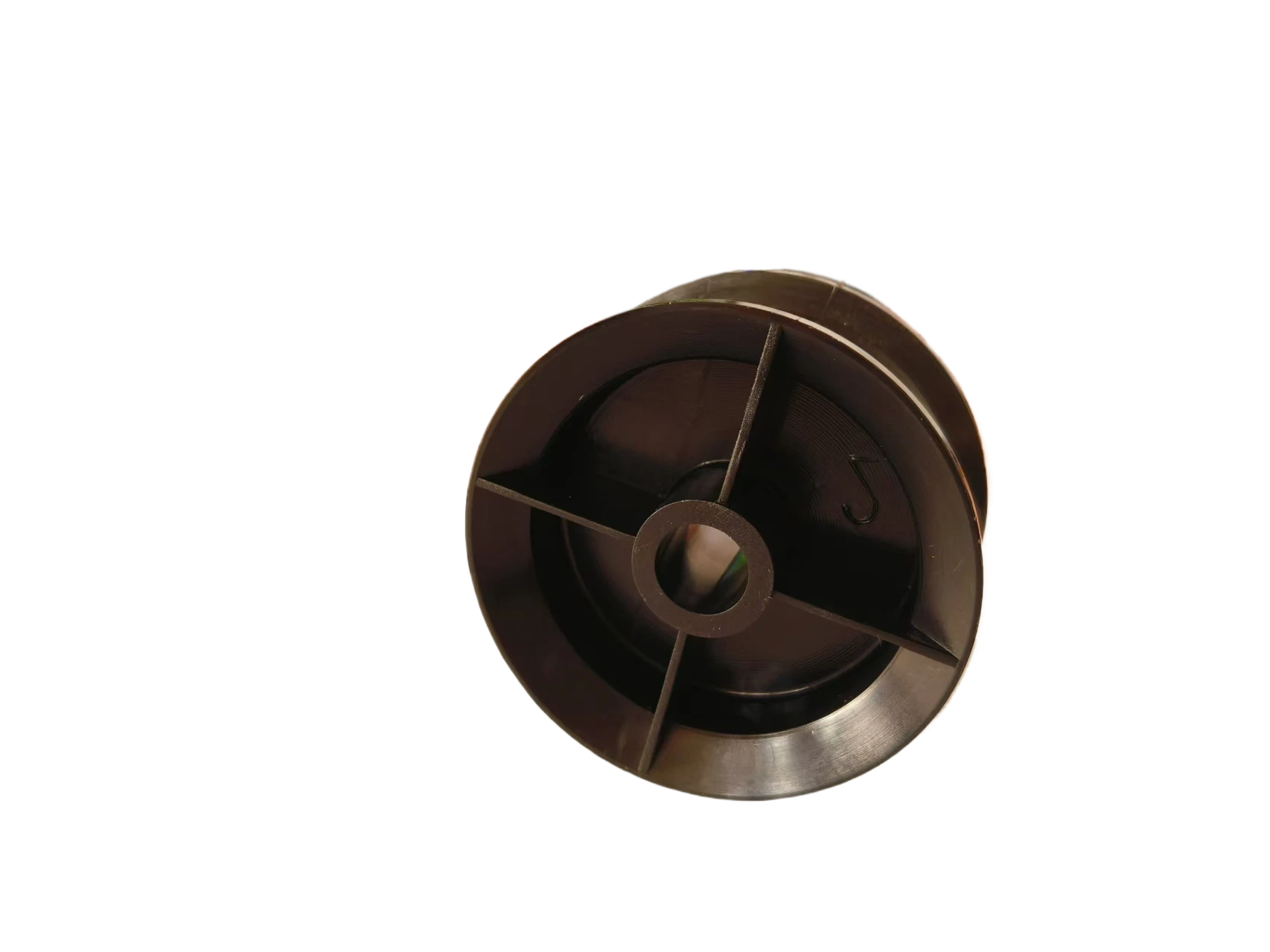
Plastic V-groove wheels are fundamental components in a wide spectrum of material handling and linear motion systems. Positioned within the industry chain as intermediate products – often specified by Original Equipment Manufacturers (OEMs) – they facilitate the smooth and controlled movement of materials and equipment. These wheels, typically constructed from engineered polymers, convert rotational motion into linear translation. Their core performance characteristics revolve around load capacity, wear resistance, rolling efficiency, and dimensional stability. The selection criteria are heavily influenced by the operational environment, including temperature, chemical exposure, and the weight and speed of the conveyed load. Unlike metal wheels, plastic V-groove wheels offer inherent advantages in applications demanding noise reduction, corrosion resistance, and non-marking contact surfaces. A significant pain point within various industries utilizing these components is premature failure due to improper material selection for the intended application, leading to costly downtime and potential safety hazards.
Material Science & Manufacturing
The predominant raw materials for plastic V-groove wheels are thermoplastic polymers, most commonly Polyurethane (PU), Nylon (Polyamide 6 and 66), Polypropylene (PP), and Acrylonitrile Butadiene Styrene (ABS). PU exhibits high abrasion resistance and load-bearing capacity, making it suitable for heavy-duty applications. Nylon offers excellent tensile strength and low friction, ideal for high-speed operations. PP provides good chemical resistance and is a cost-effective option for lighter loads. ABS balances impact resistance and processability. Each material possesses distinct physical and chemical properties. For instance, PU’s hardness, measured by the Shore durometer, directly impacts its resistance to deformation and wear. Nylon’s moisture absorption rate influences its dimensional stability. PP’s density and melting point dictate its processing parameters. ABS's glass transition temperature affects its performance in varying temperature conditions.
Manufacturing processes typically involve injection molding. This process requires precise control of several key parameters: melt temperature, mold temperature, injection pressure, and cooling rate. Inconsistent melt temperatures can lead to material degradation and dimensional inaccuracies. Improper mold temperatures affect surface finish and part shrinkage. Injection pressure must be optimized to ensure complete mold filling without creating internal stresses. Controlled cooling prevents warping and ensures uniform material density. Post-molding operations may include deburring, surface finishing (e.g., polishing), and assembly (e.g., bearing insertion). For Nylon wheels, a drying process is crucial prior to injection molding to minimize moisture content, preventing hydrolysis during processing and ensuring optimal mechanical properties. Material compatibility with mold release agents is also critical to prevent adhesion and facilitate part ejection. The V-groove profile is typically formed directly within the mold, requiring high precision mold tooling.
Performance & Engineering
The performance of plastic V-groove wheels is fundamentally governed by force analysis. The load capacity is dictated by the wheel’s material strength, diameter, and V-groove angle. A larger diameter and a shallower V-groove angle generally increase load capacity but may reduce directional stability. Finite Element Analysis (FEA) is frequently employed during the design phase to model stress distribution under various loading conditions, optimizing the wheel geometry and material selection. Rolling resistance, a crucial parameter for energy efficiency, is minimized through precise dimensional tolerances and smooth surface finishes. Environmental resistance is paramount, particularly in applications involving exposure to chemicals, UV radiation, and extreme temperatures. PU exhibits superior resistance to oils and solvents, while PP excels in chemically aggressive environments. Nylon can be susceptible to degradation by strong acids and bases.
Compliance requirements vary depending on the industry. In the food and beverage industry, materials must comply with FDA regulations for food contact. In aerospace applications, materials must meet stringent flammability and outgassing standards. Dimensional accuracy and tolerances are dictated by ISO standards, ensuring interchangeability and proper system integration. Bearing selection significantly impacts performance. Ball bearings offer low friction but are sensitive to contamination. Sleeve bearings are more tolerant of contamination but exhibit higher friction. The wheel’s mounting method – whether flanged, plain, or with a threaded stem – must be engineered to withstand the applied loads and prevent loosening or failure.
Technical Specifications
| Material | Hardness (Shore D) | Maximum Load Capacity (kgf) | Operating Temperature Range (°C) |
|---|---|---|---|
| Polyurethane (PU) | 70-95 | 50-200 | -30 to 80 |
| Nylon 6 | 85-90 | 30-150 | -40 to 85 |
| Nylon 66 | 90-95 | 40-180 | -30 to 90 |
| Polypropylene (PP) | 60-70 | 10-80 | -20 to 100 |
| Acrylonitrile Butadiene Styrene (ABS) | 80-90 | 20-120 | -20 to 80 |
| Durometer | Variable | Dependent on Material and Dimensions | Dependent on Material |
Failure Mode & Maintenance
Common failure modes for plastic V-groove wheels include wear, fatigue cracking, and deformation. Wear is primarily caused by abrasive contact with the rail or track, exacerbated by contamination (e.g., dust, grit). Fatigue cracking can occur under cyclical loading, particularly in areas of stress concentration, such as the V-groove and mounting points. Deformation arises from exceeding the material’s yield strength or prolonged exposure to elevated temperatures. Chemical attack can also cause degradation, particularly with Nylon wheels exposed to strong acids or bases. Oxidation, triggered by UV exposure, can embrittle the material over time, reducing its impact resistance.
Preventive maintenance is crucial to maximize service life. Regular inspection for wear, cracks, and deformation is essential. Lubrication reduces friction and wear, prolonging wheel life. The appropriate lubricant depends on the material and operating environment. Cleaning the wheels and tracks to remove contaminants minimizes abrasive wear. Proper alignment of the wheels and tracks prevents uneven loading and premature failure. If fatigue cracking is detected, the wheel should be replaced immediately. For applications involving high loads or harsh environments, consider using wheels with reinforced construction or higher-performance materials. Periodic replacement of wheels based on estimated service life, rather than waiting for failure, is a proactive approach to minimizing downtime.
Industry FAQ
Q: What material is best suited for a V-groove wheel operating in a high-temperature environment (120°C)?
A: For sustained operation at 120°C, Polypropylene (PP) is generally the most suitable material. While other polymers may initially withstand the temperature, PP maintains superior dimensional stability and mechanical properties at elevated temperatures compared to Nylon or ABS. Polyurethane may exhibit thermal degradation at this temperature. The specific grade of PP should be verified for high-temperature resistance.
Q: How does the V-groove angle affect load capacity and tracking performance?
A: A shallower V-groove angle generally increases load capacity by distributing the load over a larger contact area. However, a shallower angle reduces directional stability and can lead to wandering or tracking issues. A steeper angle provides better tracking but reduces load capacity. The optimal angle depends on the specific application and the balance between these two factors.
Q: What are the advantages of using ball bearings versus sleeve bearings in V-groove wheels?
A: Ball bearings offer lower rolling resistance, resulting in higher efficiency and smoother operation, especially at higher speeds. However, they are more susceptible to damage from contamination and require more precise lubrication. Sleeve bearings are more tolerant of contamination and can operate without lubrication, but they have higher friction and lower load capacity.
Q: How can I minimize wear on plastic V-groove wheels in a dusty environment?
A: In a dusty environment, implementing regular cleaning schedules for both the wheels and the tracks is crucial. Consider using sealed or shielded bearings to prevent dust ingress. Applying a dry lubricant, such as PTFE spray, can also reduce friction and wear. Enclosing the system or using dust guards can further minimize contamination.
Q: What is the impact of moisture absorption on the performance of Nylon V-groove wheels?
A: Nylon is hygroscopic, meaning it absorbs moisture from the surrounding environment. Moisture absorption causes dimensional changes, reduces tensile strength, and lowers impact resistance. Proper drying of the material before molding and storage in a controlled environment can minimize moisture absorption. Consider using a modified Nylon formulation with lower moisture absorption characteristics if operating in a high-humidity environment.
Conclusion
Plastic V-groove wheels represent a versatile and cost-effective solution for a multitude of linear motion applications. Their performance is critically dependent on material selection, manufacturing precision, and operating conditions. A comprehensive understanding of material properties, failure modes, and maintenance requirements is paramount to ensuring long-term reliability and minimizing operational costs. The choice between PU, Nylon, PP, and ABS necessitates a detailed assessment of the load, speed, temperature, chemical exposure, and environmental factors specific to the application.
Future trends in this area are likely to focus on the development of new polymer formulations with enhanced wear resistance, improved temperature stability, and reduced friction. The integration of smart sensors to monitor wheel condition and predict maintenance needs will also become increasingly prevalent. Furthermore, advancements in injection molding technology will enable the production of more complex wheel geometries and tighter dimensional tolerances, further optimizing performance and extending service life.