
Introduction
Plastic pipe inserts for compression fittings are critical components in fluid transfer systems, facilitating leak-proof connections between pipes and fittings without the need for adhesives or solvent welding. These inserts, typically manufactured from engineered polymers, provide a robust sealing surface and accommodate minor discrepancies in pipe dimensions, crucial in applications spanning potable water distribution, irrigation, chemical processing, and HVAC systems. Their technical position within the piping industry chain is as a specialized component enabling the reliable and maintainable use of compression fittings, offering a key advantage over threaded or glued connections in scenarios demanding frequent assembly/disassembly or where material compatibility is a concern. Core performance characteristics center around maintaining consistent internal diameter (ID) for unimpeded flow, resisting deformation under compressive loads, exhibiting chemical resistance to conveyed fluids, and ensuring dimensional stability across operating temperature ranges. A primary industry pain point is insert deformation or cracking leading to leaks, often stemming from material selection inappropriate for the fluid being conveyed or from improper installation torque.
Material Science & Manufacturing
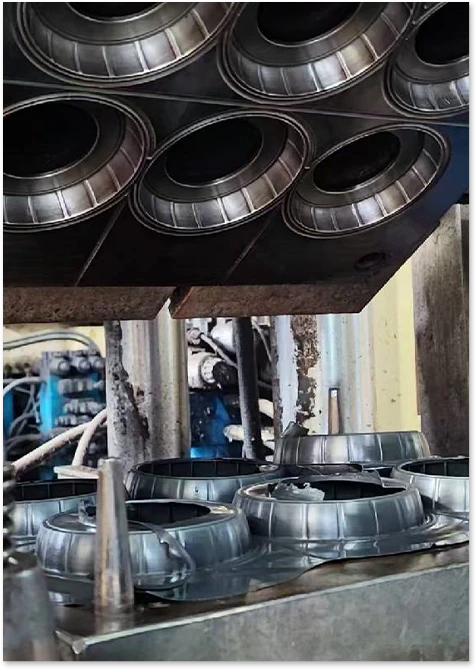
The most common materials for plastic pipe inserts are Polypropylene (PP), Polyethylene (PE), and Polyvinylidene Fluoride (PVDF). PP offers a balance of cost and chemical resistance, suited for general-purpose applications. PE, known for its flexibility and low-temperature performance, is often used in irrigation and cold-water systems. PVDF provides exceptional chemical resistance, especially against aggressive acids and solvents, making it ideal for chemical processing. Raw material properties are critical: PP homopolymers exhibit higher tensile strength and stiffness compared to PP copolymers. PE density (HDPE vs. LDPE) dictates impact resistance and flexibility. PVDF’s crystallinity impacts its mechanical strength and chemical inertness. Manufacturing typically involves injection molding. Key parameters during injection molding include melt temperature (optimizing viscosity for flow and minimizing thermal degradation), mold temperature (influencing crystallization rate and part shrinkage), injection pressure (ensuring complete mold filling without causing flash), and cooling rate (controlling warp and dimensional accuracy). Post-molding, inserts may undergo deburring and dimensional inspection. Dimensional accuracy, particularly the ID and length, is controlled using precision molds and automated inspection systems. Chemical compatibility testing is essential to verify resistance to intended fluids. For example, exposure to chlorine in potable water systems can cause degradation of some polymers, necessitating PVDF or stabilized PP formulations.
Performance & Engineering
Performance is dictated by the compressive stress applied by the compression fitting’s nut and ferrule. The insert must resist deformation under this stress without cracking or extruding. Force analysis involves calculating the radial pressure exerted on the pipe wall and the insert. Finite Element Analysis (FEA) is used to model stress distribution and predict insert behavior under various load conditions. Environmental resistance is crucial; prolonged UV exposure can cause embrittlement of some polymers. Temperature cycling induces thermal expansion and contraction, potentially leading to leaks if the insert and pipe materials have significantly different coefficients of thermal expansion. Compliance requirements vary depending on the application. Potable water systems require materials certified to NSF/ANSI 61, ensuring no harmful contaminants leach into the water. Chemical processing applications demand compliance with industry-specific regulations regarding fluid compatibility and corrosion resistance. Functional implementation necessitates precise insert sizing to match the pipe OD and fitting ID. The insert's ID must be carefully controlled to maintain flow rate and minimize pressure drop. The insert also serves to protect the pipe end from damage during compression fitting installation and to prevent crevice corrosion.
Technical Specifications
| Material | Operating Temperature Range (°C) | Maximum Operating Pressure (bar) | Tensile Strength (MPa) |
|---|---|---|---|
| Polypropylene (PP) | -20 to 80 | 10 | 20 |
| Polyethylene (PE) | -40 to 60 | 8 | 15 |
| Polyvinylidene Fluoride (PVDF) | -40 to 150 | 20 | 35 |
| Acetal (POM) | -40 to 90 | 12 | 70 |
| Nylon (PA66) | -30 to 100 | 15 | 80 |
| PTFE | -200 to 260 | 10 | 30 |
Failure Mode & Maintenance
Common failure modes include compressive creep (gradual deformation under sustained load), leading to leaks; stress cracking (induced by exposure to certain chemicals or elevated temperatures); and fatigue cracking (resulting from repeated pressure cycles). Insert splitting can occur if the compression nut is over-tightened. Chemical attack can cause swelling, embrittlement, or dissolution of the insert material, compromising its integrity. Oxidation, particularly at elevated temperatures, can lead to material degradation. Failure analysis typically involves visual inspection for cracks or deformation, chemical resistance testing to identify incompatible fluids, and mechanical testing (tensile, impact) to assess material properties. Maintenance is minimal, but regular inspection of compression fittings for leaks is recommended. If a leak is detected, the fitting should be disassembled, the insert inspected, and replaced if damaged. Proper installation torque is critical to prevent over-compression and insert failure. Using a torque wrench ensures consistent and controlled tightening. Avoid using abrasive cleaning agents that could damage the insert surface. For PVDF inserts used in aggressive chemical environments, periodic replacement based on exposure levels is recommended.
Industry FAQ
Q: What is the primary difference between PP and PVDF inserts, and when would I choose one over the other?
A: PP offers good general chemical resistance and lower cost, making it suitable for potable water and many industrial applications. However, PVDF provides significantly superior resistance to aggressive chemicals, particularly strong acids and solvents, and higher temperature capabilities. Choose PVDF when handling corrosive fluids or operating at elevated temperatures where PP would degrade.
Q: How does insert material impact the overall system’s pressure rating?
A: The insert material itself doesn't directly define the system's pressure rating; that's determined by the fitting body and pipe material. However, the insert supports that rating. A weaker insert material might deform or fail at pressures within the fitting’s specified range, leading to a leak. Selecting an insert with adequate tensile and compressive strength for the application is crucial.
Q: What are the potential consequences of using an insert with an incorrect internal diameter?
A: An insert with an ID too small will restrict flow, increasing pressure drop and potentially damaging the pump. An ID too large won't provide sufficient support to the pipe and may lead to leakage under pressure. Proper ID matching is critical for optimal performance and system integrity.
Q: What role does the insert play in preventing galvanic corrosion in dissimilar metal piping systems?
A: Plastic inserts electrically isolate the pipe from the fitting, preventing galvanic corrosion that can occur when dissimilar metals are in contact in the presence of an electrolyte. This is particularly important when connecting copper pipe to steel fittings.
Q: Are there any specific installation best practices to maximize the lifespan of plastic pipe inserts?
A: Always use a calibrated torque wrench to tighten the compression nut to the manufacturer's specified torque. Avoid over-tightening, as this can deform the insert and cause cracking. Ensure the pipe end is clean and free of burrs before insertion. Properly support the piping system to minimize stress on the fittings.
Conclusion
Plastic pipe inserts for compression fittings represent a critical enabling technology for reliable fluid handling across diverse industries. The selection of appropriate materials – PP, PE, PVDF, or others – hinges upon a comprehensive understanding of chemical compatibility, operating temperatures, and pressure requirements. Precise manufacturing processes, particularly injection molding with tight parameter control, are essential for ensuring dimensional accuracy and consistent performance.
Ultimately, the long-term success of these components relies not only on material properties and manufacturing quality but also on correct installation procedures and ongoing maintenance practices. Future development may focus on advanced polymer formulations with enhanced chemical resistance and improved creep resistance, as well as the integration of smart sensors for real-time monitoring of insert performance and leak detection.