
Introduction
Light duty plastic wheels represent a ubiquitous component in material handling systems, serving as the foundational element for movement across a broad spectrum of industrial and commercial applications. These wheels, typically supporting loads ranging from 25 kg to 250 kg, are employed in carts, trolleys, dollies, and various mobile equipment. Unlike their metal counterparts, plastic wheels prioritize floor protection, noise reduction, and corrosion resistance, making them ideal for environments sensitive to damage or contamination. The dominant polymer materials utilized include Polypropylene (PP), Polyethylene (PE), Nylon (PA6, PA66), and Polyurethane (PU), each offering a unique balance of properties affecting load capacity, wear resistance, and chemical compatibility. This guide provides an in-depth technical analysis of light duty plastic wheels, encompassing material science, manufacturing processes, performance characteristics, failure modes, and relevant industry standards. The core pain point addressed is the selection of the optimal wheel material and design to maximize lifespan and minimize total cost of ownership while ensuring operational safety and efficiency.
Material Science & Manufacturing
The selection of polymer material dictates the wheel's performance characteristics. Polypropylene (PP) offers high chemical resistance and low cost, suitable for general-purpose applications. Polyethylene (PE), particularly High-Density Polyethylene (HDPE), provides superior impact strength and wear resistance compared to PP, though with slightly reduced load capacity. Nylon (PA6, PA66) delivers excellent abrasion resistance and strength, making it suitable for demanding environments and higher loads, but is susceptible to moisture absorption, leading to dimensional changes. Polyurethane (PU), typically cast onto a PP or Nylon core, exhibits the highest load capacity, wear resistance, and shock absorption but is generally the most expensive.
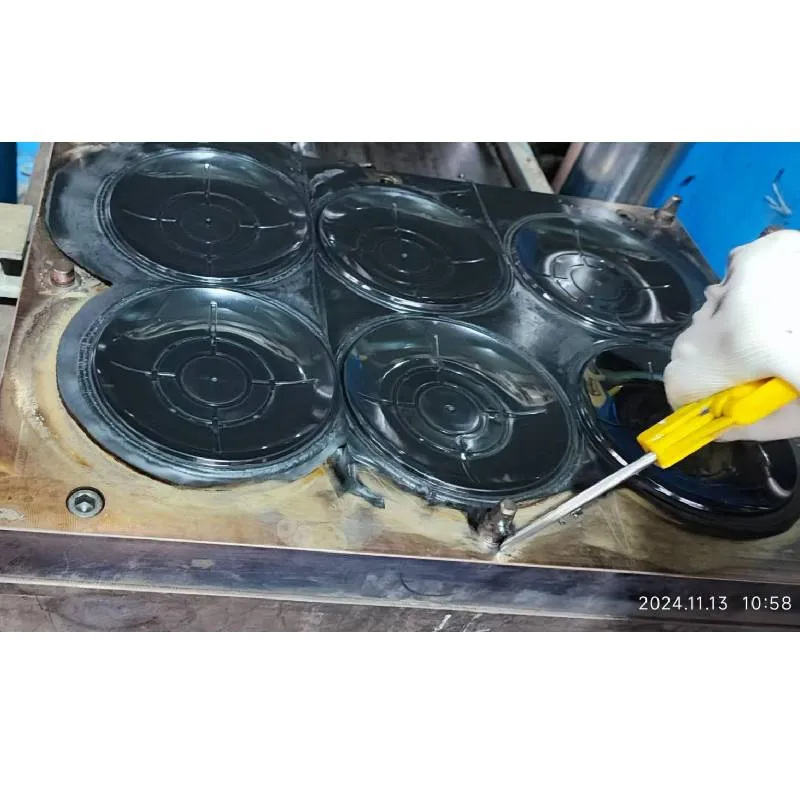
Manufacturing processes vary based on material and wheel complexity. PP and PE wheels are commonly produced via injection molding. This process involves injecting molten polymer into a closed mold cavity, followed by cooling and ejection. Critical parameters include mold temperature, injection pressure, and cooling rate, directly impacting the polymer's crystallinity and mechanical properties. Nylon wheels are often similarly injection molded, requiring precise temperature control to manage moisture content. PU wheels typically involve a reaction injection molding (RIM) process where a liquid polyurethane precursor is injected into a mold and undergoes polymerization in situ. Core-wheel assembly often utilizes press-fitting or adhesive bonding, requiring surface preparation to ensure a robust and durable connection. Material shrinkage rates during cooling are a critical factor in achieving dimensional accuracy, requiring careful mold design and process control. The presence of internal stresses, induced by uneven cooling, can compromise long-term performance and lead to premature failure.
Performance & Engineering
The performance of light duty plastic wheels is primarily dictated by load capacity, rolling resistance, and environmental resistance. Load capacity is directly related to the material's yield strength and the wheel's geometry – specifically, the diameter and width. Larger diameter wheels generally provide higher load capacity for a given material. Rolling resistance, a critical factor in reducing energy consumption in material handling, is influenced by the wheel's material hardness, deformation characteristics, and surface smoothness. Softer materials like PU exhibit lower rolling resistance on smooth surfaces, while harder materials like Nylon perform better on rough surfaces. Environmental resistance encompasses resistance to chemicals, UV degradation, and temperature fluctuations. PP and PE demonstrate excellent chemical resistance to most acids and bases, while Nylon is susceptible to degradation by strong acids and alkalis. UV exposure can cause chain scission in PP and PE, leading to embrittlement and cracking. Temperature extremes can alter the material's modulus of elasticity, affecting load capacity and dimensional stability. Force analysis during operation must consider both static and dynamic loads, accounting for shock loading and impact forces. Finite Element Analysis (FEA) is frequently employed to optimize wheel geometry and material distribution to minimize stress concentrations and maximize structural integrity.
Technical Specifications
| Material | Load Capacity (kg) | Hardness (Shore D) | Operating Temperature (°C) |
|---|---|---|---|
| Polypropylene (PP) | 50-100 | 40-60 | -20 to 80 |
| Polyethylene (PE) | 75-150 | 45-65 | -40 to 60 |
| Nylon (PA6) | 100-200 | 70-80 | -30 to 100 |
| Nylon (PA66) | 150-250 | 75-85 | -20 to 120 |
| Polyurethane (PU) - on PP core | 120-180 | 80-90 | -10 to 70 |
| Polyurethane (PU) - on Nylon core | 180-250 | 85-95 | -20 to 80 |
Failure Mode & Maintenance
Common failure modes for light duty plastic wheels include wear, cracking, and deformation. Wear primarily occurs due to abrasion from contact with the floor surface and can be exacerbated by the presence of abrasive particles. Cracking can result from fatigue caused by repeated loading, impact damage, or exposure to UV radiation. Environmental stress cracking (ESC) can occur when the wheel is exposed to certain chemicals or solvents, particularly in Nylon materials. Deformation, typically observed as flattening or bulging, indicates exceeding the wheel's load capacity or exposure to excessive temperatures. Fatigue cracking initiates at stress concentration points, such as the wheel bore or at the interface between the core and the PU tread. Preventive maintenance involves regular inspection for wear, cracks, and deformation. Lubrication of the wheel bearings is crucial to reduce friction and prevent premature wear. Wheels operating in harsh environments should be periodically cleaned to remove contaminants. Damaged wheels should be replaced immediately to prevent catastrophic failure and potential safety hazards. For Nylon wheels, minimizing moisture absorption through proper storage and use is important. Implementing a wheel rotation schedule can distribute wear evenly and extend the lifespan of the entire wheel set.
Industry FAQ
Q: What is the primary difference between a PP and a Nylon wheel in terms of long-term durability?
A: Nylon wheels generally exhibit superior abrasion resistance compared to PP wheels, resulting in a longer service life in abrasive environments. However, Nylon is susceptible to moisture absorption, which can lead to dimensional changes and reduced load capacity over time. PP is less affected by moisture but is more prone to wear and cracking under prolonged stress.
Q: How does the hardness of a PU wheel affect its performance on different floor surfaces?
A: Softer PU wheels (lower Shore D hardness) conform better to uneven surfaces, providing better grip and reducing vibration, but they exhibit higher rolling resistance on smooth surfaces. Harder PU wheels (higher Shore D hardness) roll more efficiently on smooth surfaces but may struggle on uneven terrain and offer less shock absorption.
Q: What considerations should be taken when selecting a wheel for use in a chemical processing plant?
A: Chemical compatibility is paramount. PP and PE generally offer broad chemical resistance. However, specific chemical exposure needs to be assessed. Nylon is vulnerable to strong acids and bases. Always consult a chemical resistance chart before selecting a material. Additionally, consider the potential for spillage and select a material that is easily cleaned and unaffected by the chemicals present.
Q: What is the impact of operating temperature on the load capacity of a plastic wheel?
A: Elevated temperatures generally reduce the yield strength and modulus of elasticity of plastic materials, decreasing the wheel's load capacity. Conversely, lower temperatures can increase brittleness. Operating temperatures should always be within the specified range for the chosen material to ensure safe and reliable performance.
Q: Is preventative maintenance required for plastic wheels, and what does it entail?
A: Yes. Preventative maintenance is essential. Regular inspection for wear, cracks, and deformation is crucial. Lubricating wheel bearings reduces friction and extends their lifespan. Cleaning wheels operating in dirty environments prevents build-up and potential damage. Replacing damaged wheels promptly prevents catastrophic failure.
Conclusion
Light duty plastic wheels are critical components in numerous material handling applications, offering a balance of cost-effectiveness, floor protection, and ease of use. The optimal material selection – PP, PE, Nylon, or PU – is contingent on the specific operating environment, load requirements, and anticipated wear conditions. Understanding the material's physical and chemical properties, as well as the nuances of the manufacturing processes, is essential for ensuring long-term reliability and minimizing total cost of ownership.
Future development trends include the increasing use of reinforced polymers with fillers such as glass fiber or carbon fiber to enhance strength and stiffness, and the incorporation of wear-resistant coatings to extend service life. The adoption of bio-based plastics offers a sustainable alternative to traditional petroleum-based materials. Continued advancements in polymer technology and manufacturing techniques will drive further improvements in the performance and durability of light duty plastic wheels, ultimately enhancing the efficiency and safety of material handling operations.