
Introduction
Heavy duty plastic wheels represent a critical component in material handling systems across diverse industries, including warehousing, logistics, construction, and manufacturing. Unlike traditional metal or rubber wheels, these utilize engineered polymers to provide a balance of load capacity, durability, and floor protection. Their technical position within the industry chain lies between the caster/wheel assembly manufacturer and the end-user’s equipment – forklifts, pallet jacks, carts, and automated guided vehicles (AGVs). Core performance characteristics revolve around load rating, resistance to wear and impact, rolling resistance, and chemical compatibility. The increasing demand for these wheels is driven by the need for quieter operation, non-marking capabilities, and reduced overall system weight, particularly in applications prioritizing sensitive flooring or cleanroom environments. The selection process necessitates careful consideration of the intended application, load demands, operational environment, and the specific polymer formulation utilized in wheel construction.
Material Science & Manufacturing
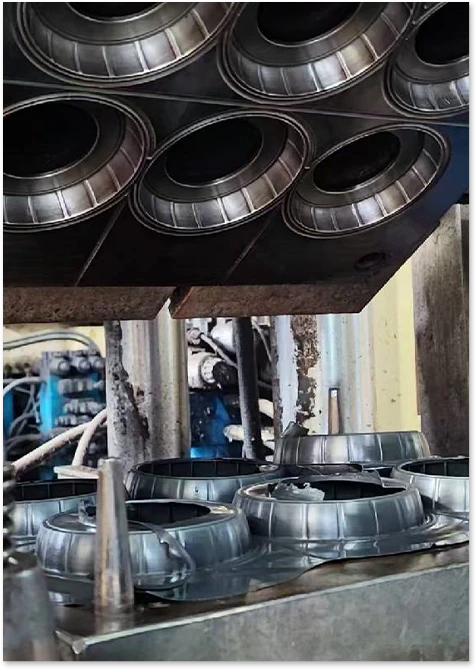
The predominant materials used in heavy-duty plastic wheels are Polypropylene (PP), Polyurethane (PU), Nylon 6 and Nylon 66, and, increasingly, High-Density Polyethylene (HDPE). PP offers excellent chemical resistance and is cost-effective but has lower impact strength. PU combines high load capacity and abrasion resistance, making it ideal for demanding applications. Nylon 6 and 66 provide superior strength, stiffness, and temperature resistance, though they are susceptible to moisture absorption. HDPE excels in low-temperature performance and impact resistance. Manufacturing processes typically involve injection molding. This process necessitates precise control of melt temperature, mold temperature, injection pressure, and cooling rates to ensure dimensional accuracy and material homogeneity. Raw material preparation is critical; polymers are often compounded with additives such as glass fiber reinforcement for increased strength, UV stabilizers for enhanced weatherability, and lubricants to reduce friction. Welding may be employed for constructing wheel cores or integrating metal components like bearings. Post-molding operations include deburring, quality inspection (dimensional checks, visual defect analysis), and potentially surface treatments like coating or polishing to optimize performance. A crucial parameter is the molecular weight distribution (MWD) of the polymer; a broader MWD typically leads to improved processability but can affect long-term creep resistance. The degree of crystallinity within the polymer also dictates mechanical properties – higher crystallinity generally translates to increased stiffness and reduced permeability.
Performance & Engineering
Performance analysis of heavy-duty plastic wheels centers on load capacity, resistance to deformation under load (creep), wear resistance, and rolling resistance. Force analysis must account for static loads, dynamic loads (impacts, acceleration/deceleration), and shock loads. The wheel's geometry – diameter, width, and profile – significantly influences load distribution and stability. Finite Element Analysis (FEA) is routinely employed during the design phase to optimize wheel structure and predict stress concentrations under various loading conditions. Environmental resistance is paramount; exposure to UV radiation, temperature fluctuations, and corrosive chemicals can degrade polymer properties. For applications in harsh environments, UV stabilizers and chemically resistant polymer formulations are essential. Compliance requirements vary depending on the industry and application. For instance, wheels used in food processing facilities must comply with FDA regulations regarding material safety. Rolling resistance, a key factor in energy efficiency for AGVs and carts, is affected by wheel diameter, material hardness, and tire pressure (if applicable). Bearing selection and lubrication are also crucial for minimizing friction and ensuring smooth operation. The coefficient of restitution (COR) dictates the wheel’s ability to absorb and return energy during impact, impacting ride quality and preventing damage to transported goods. Furthermore, the static and dynamic deflection rates of the wheel under load are important engineering considerations to ensure stable operation and prevent premature failure.
Technical Specifications
| Material | Load Capacity (kg) | Durometer (Shore D) | Operating Temperature (°C) |
|---|---|---|---|
| Polypropylene (PP) | 150 - 300 | 60-70 | -20 to 80 |
| Polyurethane (PU) | 300 - 800 | 85-95 | -30 to 100 |
| Nylon 6 | 400 - 1000 | 70-80 | -40 to 120 |
| Nylon 66 | 500 - 1200 | 75-85 | -30 to 150 |
| High-Density Polyethylene (HDPE) | 200 - 400 | 65-75 | -50 to 90 |
| Reinforced Nylon 66 (Glass Filled) | 800 - 1500 | 80-90 | -40 to 160 |
Failure Mode & Maintenance
Common failure modes in heavy-duty plastic wheels include fatigue cracking (especially in nylon-based wheels subjected to cyclic loading), chunking or chipping (often due to impact damage), creep deformation (long-term deformation under sustained load), and wear (abrasion from contact with the floor). Fatigue cracking initiates at stress concentration points, such as bearing mounts or wheel edges. Chunking typically occurs in PU wheels experiencing severe impacts. Creep is exacerbated by elevated temperatures and sustained high loads. Wear rates depend on the material’s hardness, the floor surface’s abrasiveness, and the presence of contaminants. Oxidation can degrade polymer properties over time, particularly in PU wheels exposed to UV radiation and ozone. Maintenance involves regular inspection for cracks, chips, and wear. Bearing lubrication is critical; insufficient lubrication leads to increased friction, heat buildup, and premature bearing failure. Wheel alignment should be checked periodically to ensure even load distribution. Cleaning wheels to remove debris and contaminants prevents accelerated wear. In cases of significant wear or damage, wheel replacement is recommended. Preventative measures include selecting the appropriate wheel material for the application, avoiding overloading, and implementing a regular maintenance schedule. A comprehensive failure analysis (examining fracture surfaces, material properties, and operational history) is crucial for identifying root causes and preventing future failures.
Industry FAQ
Q: What are the key differences between Nylon 6 and Nylon 66 in wheel applications?
A: Nylon 66 exhibits higher tensile strength, stiffness, and temperature resistance compared to Nylon 6. However, Nylon 6 offers better impact resistance and is generally more cost-effective. Nylon 6 also absorbs less moisture than Nylon 66, leading to greater dimensional stability in humid environments. The choice depends on the specific application’s requirements – Nylon 66 is preferred for high-load, high-temperature applications, while Nylon 6 is suitable for applications prioritizing impact resistance and cost-effectiveness.
Q: How does glass fiber reinforcement affect the performance of plastic wheels?
A: Glass fiber reinforcement significantly increases the wheel’s strength, stiffness, and dimensional stability. It improves resistance to creep and deformation under load. However, it also increases the wheel's weight and can make it more brittle, potentially reducing impact resistance. The percentage of glass fiber filler influences the extent of these effects.
Q: What is the impact of floor surface on wheel wear?
A: Rough or abrasive floor surfaces dramatically accelerate wheel wear. Concrete floors, particularly those with exposed aggregate, are more abrasive than smooth epoxy or polyurethane coatings. Contaminants like sand, metal shavings, and chemicals also contribute to wear. Selecting a wheel material with high abrasion resistance and maintaining clean floors are crucial for maximizing wheel lifespan.
Q: What factors contribute to creep in plastic wheels?
A: Creep is influenced by sustained load, temperature, and the polymer's inherent viscoelastic properties. Higher loads and temperatures accelerate creep. Polymers with lower stiffness and higher ductility are more susceptible to creep. Glass fiber reinforcement can mitigate creep by increasing stiffness.
Q: How do I determine the appropriate load capacity for a plastic wheel?
A: The appropriate load capacity depends on the application’s static load, dynamic load, and safety factor. Consult the wheel manufacturer’s load rating charts and derate the capacity based on the operating conditions. Consider the shock loads and potential for overloading. A safety factor of at least 2 is recommended for critical applications.
Conclusion
Heavy-duty plastic wheels represent a versatile and increasingly sophisticated solution for material handling applications. The selection process is not merely about choosing a plastic material, but requires a thorough understanding of material science, manufacturing processes, and engineering principles. Proper consideration of load requirements, environmental factors, and potential failure modes is critical for ensuring optimal performance and longevity.
Future developments in this field are likely to focus on the incorporation of advanced polymer formulations, such as thermoplastic elastomers (TPEs) and reinforced composites, to further enhance performance characteristics. Integration with sensor technologies for monitoring load, temperature, and wear will also become more prevalent, enabling predictive maintenance and improved system efficiency. The ongoing drive for sustainable materials and manufacturing processes will likely lead to increased use of recycled polymers and bio-based plastics in wheel construction.