
Introduction
70mm Polyvinyl Chloride (PVC) pipe fittings represent a critical component within fluid handling systems across diverse industries including water distribution, irrigation, drainage, and chemical processing. This technical guide provides an in-depth exploration of these fittings, covering material science, manufacturing processes, performance characteristics, potential failure modes, and relevant industry standards. Their prevalence stems from a combination of cost-effectiveness, corrosion resistance, and ease of installation. However, achieving optimal performance and longevity necessitates a thorough understanding of their limitations and proper application. This guide focuses on fittings designed for pressure applications – including elbows, tees, couplings, reducers, and valves – conforming to established dimensional ratios (DR) for specific pressure ratings. A core pain point in the industry revolves around selecting the correct PVC compound for specific chemical exposures and temperatures, preventing premature degradation and catastrophic failure. Ensuring proper joining techniques is also crucial, as improper solvent welding or mechanical joining can compromise system integrity.
Material Science & Manufacturing
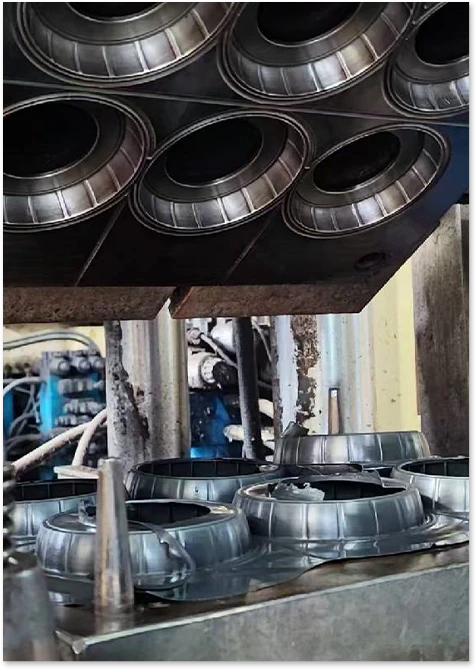
70mm PVC pipe fittings are predominantly manufactured from PVC compounds, typically utilizing a suspension polymerization process. The base polymer, polyvinyl chloride, is a thermoplastic resin composed of repeating vinyl chloride monomers. Critical material properties influencing fitting performance include tensile strength (typically 50-70 MPa), impact strength (Izod notched impact strength ranges from 3-10 kJ/m² depending on formulation), and hardness (Shore D hardness of 70-80). Plasticizers, such as dioctyl phthalate (DOP) or diisononyl phthalate (DINP), are added to enhance flexibility and processability, though their presence can impact long-term chemical resistance. Stabilizers, including organotin compounds or calcium-zinc stabilizers, are incorporated to prevent thermal degradation during processing and UV exposure during service. The manufacturing process commonly employs injection molding. Molten PVC compound is injected into a closed mold cavity under high pressure. Precise control of mold temperature (typically 170-200°C) and injection pressure is vital to ensure dimensional accuracy and prevent warping. Extrusion is also used for certain fitting types, such as some reducing couplings. Post-molding cooling and finishing operations, including deburring and visual inspection, are performed to meet quality control standards. Key parameter control involves maintaining consistent batch-to-batch resin composition, ensuring proper mixing of additives, and calibrating molding machines for accurate dimensions.
Performance & Engineering
The performance of 70mm PVC pipe fittings is primarily governed by their ability to withstand internal pressure, external loads, and environmental stressors. Hydrostatic pressure testing, as outlined in ASTM D1598, is crucial to verify pressure-bearing capacity. The allowable stress within the PVC material is a function of temperature – decreasing as temperature increases. Force analysis considers hoop stress and longitudinal stress generated by internal pressure. External loads, such as soil overburden or suspended pipe weight, must be accounted for to prevent ovalization and cracking. PVC fittings exhibit relatively low creep resistance, meaning they can deform slowly under sustained load. Therefore, proper support and anchoring are essential. Chemical resistance is a critical performance parameter. While PVC offers excellent resistance to many acids and bases, it is susceptible to degradation by certain solvents, oils, and chlorinated hydrocarbons. Temperature limitations are also significant; prolonged exposure to temperatures above 60°C can lead to softening and reduced strength. Compliance requirements vary by region and application. For potable water systems, fittings must meet NSF/ANSI 61 standards for lead content and extractable contaminants. For drainage and vent applications, adherence to Uniform Plumbing Code (UPC) or International Plumbing Code (IPC) is necessary. Furthermore, fittings must demonstrate resistance to UV degradation when exposed to sunlight, often achieved through the addition of UV stabilizers to the PVC formulation.
Technical Specifications
| Parameter | Unit | Specification (Schedule 40 PVC) | Specification (Schedule 80 PVC) |
|---|---|---|---|
| Nominal Pipe Size | mm | 70 | 70 |
| Outside Diameter | mm | 76.1 | 76.1 |
| Wall Thickness (Schedule 40) | mm | 3.2 | - |
| Wall Thickness (Schedule 80) | mm | - | 5.1 |
| Pressure Rating @ 23°C | MPa | 1.0 | 1.6 |
| Hydrostatic Test Pressure | MPa | 1.5 | 2.4 |
| Tensile Strength | MPa | 55-70 | 55-70 |
Failure Mode & Maintenance
Common failure modes in 70mm PVC pipe fittings include brittle fracture, cracking, and degradation. Brittle fracture often occurs due to impact loading, particularly at low temperatures, or from pre-existing stress concentrations. Cracking can arise from sustained tensile stress, especially in areas of geometric discontinuity (e.g., threads). Chemical attack from incompatible fluids leads to degradation, causing embrittlement and loss of strength. UV exposure can also cause surface chalking and reduced impact resistance. Fatigue cracking may occur in systems subjected to cyclic pressure fluctuations. Failure analysis should involve visual inspection for cracks, discoloration, and deformation. Non-destructive testing methods, such as ultrasonic testing, can detect subsurface flaws. Preventative maintenance includes regular visual inspections, ensuring proper support to minimize stress, and avoiding exposure to incompatible chemicals. When replacing fittings, always use compatible solvent cement or mechanical joining methods. Properly tightened mechanical joints are essential to prevent leaks. Avoid over-tightening, which can lead to cracking. For systems containing aggressive fluids, periodic chemical compatibility testing is recommended. If degradation is observed, immediate replacement of the affected fitting is crucial to prevent catastrophic system failure. Records of fitting material and installation date are important for tracking long-term performance and identifying potential issues.
Industry FAQ
Q: What is the impact of temperature on the pressure rating of 70mm PVC fittings?
A: The pressure rating of PVC fittings decreases significantly as temperature increases. This is due to the reduction in tensile strength and increased creep susceptibility at higher temperatures. De-rating factors, specified by manufacturers and standards like ASTM D1598, must be applied to the nominal pressure rating to account for operating temperatures above 23°C. For example, a fitting rated for 1.0 MPa at 23°C might only be rated for 0.7 MPa at 50°C.
Q: How do I ensure a proper solvent weld joint?
A: Proper solvent welding requires meticulous preparation. First, ensure all surfaces are clean, dry, and free of grease or contaminants. Use a PVC primer to soften the surfaces and enhance bonding. Apply solvent cement evenly to both the fitting socket and the pipe end. Immediately insert the pipe fully into the fitting, giving a quarter turn to distribute the cement. Hold firmly for approximately 30 seconds to allow the joint to set. Avoid excessive cement, as it can weaken the joint. Ambient temperature and humidity affect the curing time.
Q: What are the common chemicals incompatible with 70mm PVC fittings?
A: PVC is susceptible to attack by many organic solvents, including acetone, benzene, toluene, and chlorinated hydrocarbons. Concentrated acids (e.g., sulfuric acid, nitric acid) and strong oxidizing agents can also cause degradation. Certain petroleum-based products, such as oils and greases, can lead to swelling and embrittlement. Refer to chemical compatibility charts provided by PVC manufacturers to determine suitability for specific applications.
Q: What is the difference between Schedule 40 and Schedule 80 PVC fittings?
A: Schedule 40 and Schedule 80 refer to the wall thickness of the fitting. Schedule 80 fittings have thicker walls, providing greater pressure-bearing capacity and resistance to impact. Schedule 80 fittings are typically used in higher-pressure applications or where greater mechanical strength is required. They are also generally more expensive than Schedule 40 fittings.
Q: How can I mitigate the risk of UV degradation in outdoor applications?
A: UV degradation can be mitigated by using PVC compounds formulated with UV stabilizers. Painting the fittings with a UV-resistant coating is another option. Alternatively, shielding the fittings from direct sunlight using protective covers or burying them underground can significantly extend their service life. Regular inspection for surface chalking and discoloration is also important.
Conclusion
70mm PVC pipe fittings offer a versatile and cost-effective solution for a wide range of fluid handling applications. However, their performance and longevity are heavily dependent on proper material selection, manufacturing quality, installation techniques, and operating conditions. Understanding the material’s limitations regarding temperature, chemical compatibility, and mechanical stress is paramount to preventing premature failure. Adhering to established industry standards and best practices, combined with regular inspection and maintenance, is essential for ensuring the safe and reliable operation of PVC piping systems.
Looking ahead, advancements in PVC formulation, such as the development of enhanced UV stabilizers and impact modifiers, will continue to improve the performance and durability of these fittings. Furthermore, increased emphasis on sustainable materials and recycling initiatives will drive the development of eco-friendly PVC compounds. Thorough consideration of all technical aspects presented in this guide will empower engineers and procurement professionals to make informed decisions and optimize the lifecycle cost of PVC piping systems.