
Introduction
Four-inch plastic wheels are ubiquitous components across a wide range of industrial and consumer applications, including material handling equipment, furniture, robotics, and point-of-sale displays. Positioned as a cost-effective alternative to metal or rubber wheels, their functionality hinges on a balance of load capacity, wear resistance, and maneuverability. The core performance characteristics are dictated by the polymer material selected, manufacturing process employed, and the specific environmental conditions encountered during operation. This guide provides an in-depth technical overview of 4-inch plastic wheels, covering material science, manufacturing techniques, performance engineering, failure modes, and relevant industry standards. A crucial pain point within the industry is the selection of the optimal polymer for a given application, balancing cost, strength, and chemical resistance, coupled with ensuring dimensional stability and avoiding premature wear leading to operational downtime and increased lifecycle costs.
Material Science & Manufacturing
The predominant materials for 4-inch plastic wheels are Polypropylene (PP), Polyethylene (PE), Polyvinyl Chloride (PVC), and Nylon (Polyamide 6 or 66). PP offers excellent chemical resistance and low cost but exhibits lower strength and higher temperature sensitivity. PE, particularly High-Density Polyethylene (HDPE), provides improved impact resistance but similar temperature limitations. PVC is rigid and abrasion-resistant, often used in heavier-duty applications, however, it has environmental concerns related to plasticizers. Nylon demonstrates the highest strength, wear resistance, and temperature tolerance, making it suitable for demanding environments, but comes at a higher cost.
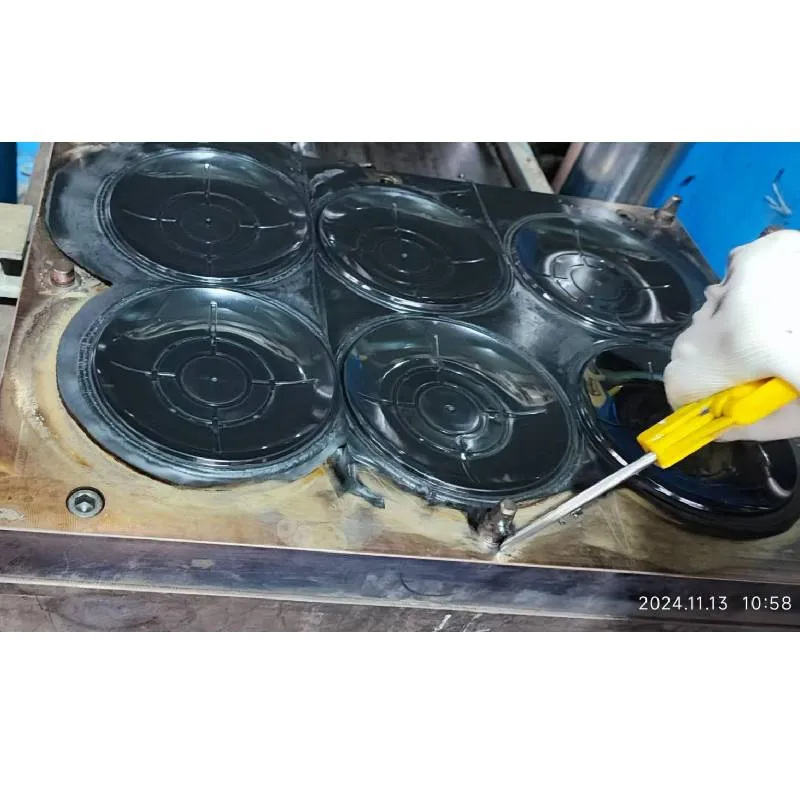
Manufacturing processes typically include injection molding. This process involves injecting molten polymer into a closed mold cavity, allowing it to cool and solidify. Critical parameters include mold temperature, injection pressure, and cooling rate. Precise control of these parameters is vital to minimize warpage, sink marks, and internal stresses that can compromise the wheel's structural integrity. For Nylon wheels, a glass-filled variant is common, utilizing approximately 30% glass fiber reinforcement to significantly enhance strength and stiffness. The glass fibers are carefully dispersed within the polymer matrix during the injection molding process. Extrusion is also used to create the wheel's core structure or tire tread, particularly for applications requiring a softer, more resilient surface. Post-processing operations may include deburring, surface finishing, and bearing insertion, the latter being a critical step affecting wheel smoothness and load capacity. The choice of bearing material (steel, plastic, or composite) further influences performance and cost.
Performance & Engineering
The performance of a 4-inch plastic wheel is governed by several engineering principles. Load capacity is directly related to the material’s flexural modulus and the wheel's geometry. Finite Element Analysis (FEA) is commonly used to simulate stress distribution under varying load conditions, identifying potential weak points and optimizing wheel design. Environmental resistance is another critical factor. Exposure to UV radiation can cause polymer degradation, leading to embrittlement and reduced strength. Additives such as UV stabilizers are incorporated into the polymer formulation to mitigate this effect. Chemical resistance must also be considered; exposure to solvents, oils, or acids can cause swelling, cracking, or dissolution. Bearing selection and integration heavily impact performance. Radial and axial load ratings of the bearing determine the maximum load the wheel can handle without premature failure. The bearing’s friction coefficient influences the wheel’s rolling resistance and ease of movement. Furthermore, the wheel's hardness, measured using the Shore hardness scale, dictates its resistance to abrasion and indentation, important in abrasive environments. Coefficient of restitution is an important factor in applications where impact absorption is required. Compliance requirements, particularly in food and pharmaceutical industries, often mandate the use of FDA-approved materials and adherence to stringent cleanliness standards.
Technical Specifications
| Material | Diameter (in) | Load Capacity (lbs) | Shore Hardness (A) | Temperature Range (°F) | Coefficient of Friction (Static) |
|---|---|---|---|---|---|
| Polypropylene (PP) | 4 | 80-150 | 60-70 | 32-176 | 0.15-0.25 |
| High-Density Polyethylene (HDPE) | 4 | 100-200 | 65-75 | 32-185 | 0.10-0.20 |
| Polyvinyl Chloride (PVC) | 4 | 150-300 | 80-90 | 32-158 | 0.20-0.30 |
| Nylon 6 | 4 | 250-400 | 70-80 | 32-212 | 0.18-0.28 |
| Nylon 66 | 4 | 300-500 | 75-85 | 32-250 | 0.20-0.30 |
| Glass-Filled Nylon 6 | 4 | 400-600 | 85-95 | 32-284 | 0.25-0.35 |
Failure Mode & Maintenance
Common failure modes for 4-inch plastic wheels include wear (abrasion, erosion), cracking (fatigue, stress cracking), deformation (creep, plastic deformation), and bearing failure. Abrasion wear occurs due to contact with abrasive surfaces, leading to material loss and reduced wheel diameter. Fatigue cracking initiates from stress concentrations, often near mounting holes or mold seams, and propagates under cyclic loading. Stress cracking can be caused by exposure to corrosive chemicals or prolonged stress. Creep, or plastic deformation, is time-dependent deformation under constant load, particularly prevalent at elevated temperatures. Bearing failure can manifest as excessive play, noise, or complete seizure.
Preventative maintenance includes regular inspection for wear, cracks, and deformation. Lubricating the bearings with a suitable grease or oil reduces friction and extends bearing life. Avoid overloading the wheels, as exceeding the load capacity accelerates wear and increases the risk of cracking. Protect wheels from exposure to harsh chemicals and UV radiation. If cracking is detected, immediate replacement is recommended. For glass-filled nylon wheels, inspect for delamination of the glass fibers from the polymer matrix, indicating a potential structural weakness. Cleaning wheels regularly to remove dirt and debris reduces abrasive wear and maintains smooth operation. Periodically tightening mounting hardware ensures secure wheel attachment and prevents premature failure.
Industry FAQ
Q: What is the primary difference between PP and PE wheels regarding impact resistance?
A: While both PP and PE offer good impact resistance, HDPE (a type of PE) generally outperforms PP in this regard. HDPE has a higher molecular weight and greater chain entanglement, resulting in improved toughness and ability to absorb impact energy without fracturing. PP tends to be more brittle, especially at lower temperatures.
Q: How does glass fiber reinforcement affect the performance of nylon wheels?
A: Glass fiber reinforcement significantly increases the strength, stiffness, and dimensional stability of nylon wheels. It reduces creep, improves load-bearing capacity, and enhances resistance to wear and deformation. However, it can also slightly increase the wheel's brittleness and cost.
Q: What considerations should be made when selecting a wheel for use in a chemically corrosive environment?
A: The choice of material is paramount. PVC and PP generally offer good resistance to a wide range of chemicals. Nylon has good resistance to many chemicals, but can be attacked by strong acids and bases. Conduct thorough compatibility testing with the specific chemicals present in the environment before deployment. Consider using chemically resistant coatings or seals to further protect the wheel.
Q: What is the impact of bearing type on the overall performance of a plastic wheel?
A: Bearing type dramatically influences rolling resistance, load capacity, and maintenance requirements. Ball bearings offer low rolling resistance and high load capacity but require regular lubrication. Plain plastic bearings are self-lubricating and maintenance-free but have lower load capacity. Sealed bearings provide better protection against contamination but may have higher initial cost.
Q: What are the key factors determining the lifespan of a plastic wheel?
A: Lifespan is determined by several factors including the material selected, the load applied, the operating environment (temperature, chemicals, UV exposure), and the quality of the bearing. Regular inspection and maintenance, including lubrication and timely replacement of worn components, are critical for maximizing lifespan.
Conclusion
4-inch plastic wheels represent a versatile and cost-effective solution for a broad spectrum of applications. The optimal material selection hinges on a thorough understanding of the operating environment, load requirements, and desired performance characteristics. Nylon, particularly glass-filled nylon, provides superior strength and durability for demanding applications, while PP and PE offer suitable performance for lighter-duty tasks. Precise manufacturing control and careful consideration of bearing selection are crucial for maximizing wheel performance and longevity.
Future trends in 4-inch plastic wheel technology are likely to focus on the development of bio-based polymers with enhanced properties, the integration of smart sensors for monitoring wheel condition and predicting failures, and the implementation of advanced manufacturing techniques such as additive manufacturing to create customized wheel designs optimized for specific applications. Continued innovation in material science and engineering will drive further improvements in the performance, sustainability, and cost-effectiveness of these essential components.