
Introduction
24-inch plastic wheels are a ubiquitous component in a diverse range of applications, including industrial carts, dollies, recreational equipment (wheelbarrows, garden carts), and material handling systems. They represent a cost-effective alternative to pneumatic, metal, or rubber wheels, particularly in scenarios where load capacity requirements are moderate and impact resistance is paramount. Their construction primarily utilizes thermoplastic polymers, with polypropylene (PP), polyethylene (PE), and polyvinyl chloride (PVC) being the most common materials. This guide provides a comprehensive technical overview of 24-inch plastic wheels, encompassing material science, manufacturing processes, performance characteristics, failure modes, and relevant industry standards. A key industry pain point lies in optimizing the balance between cost, load capacity, and durability, often necessitating a deep understanding of polymer properties and manufacturing tolerances. Furthermore, consistent performance under varying environmental conditions (temperature, UV exposure) represents a significant engineering challenge.
Material Science & Manufacturing
The material selection for 24-inch plastic wheels heavily influences their performance. Polypropylene (PP) offers excellent chemical resistance and a low coefficient of friction, making it suitable for applications involving corrosive substances or smooth surfaces. However, PP exhibits relatively low impact strength, especially at lower temperatures. Polyethylene (PE), particularly high-density polyethylene (HDPE), provides improved impact resistance and abrasion resistance compared to PP, though its temperature resistance is generally lower. Polyvinyl Chloride (PVC) offers a balance of properties, including good rigidity and cost-effectiveness, but can become brittle at low temperatures and may release harmful fumes during manufacturing or combustion.
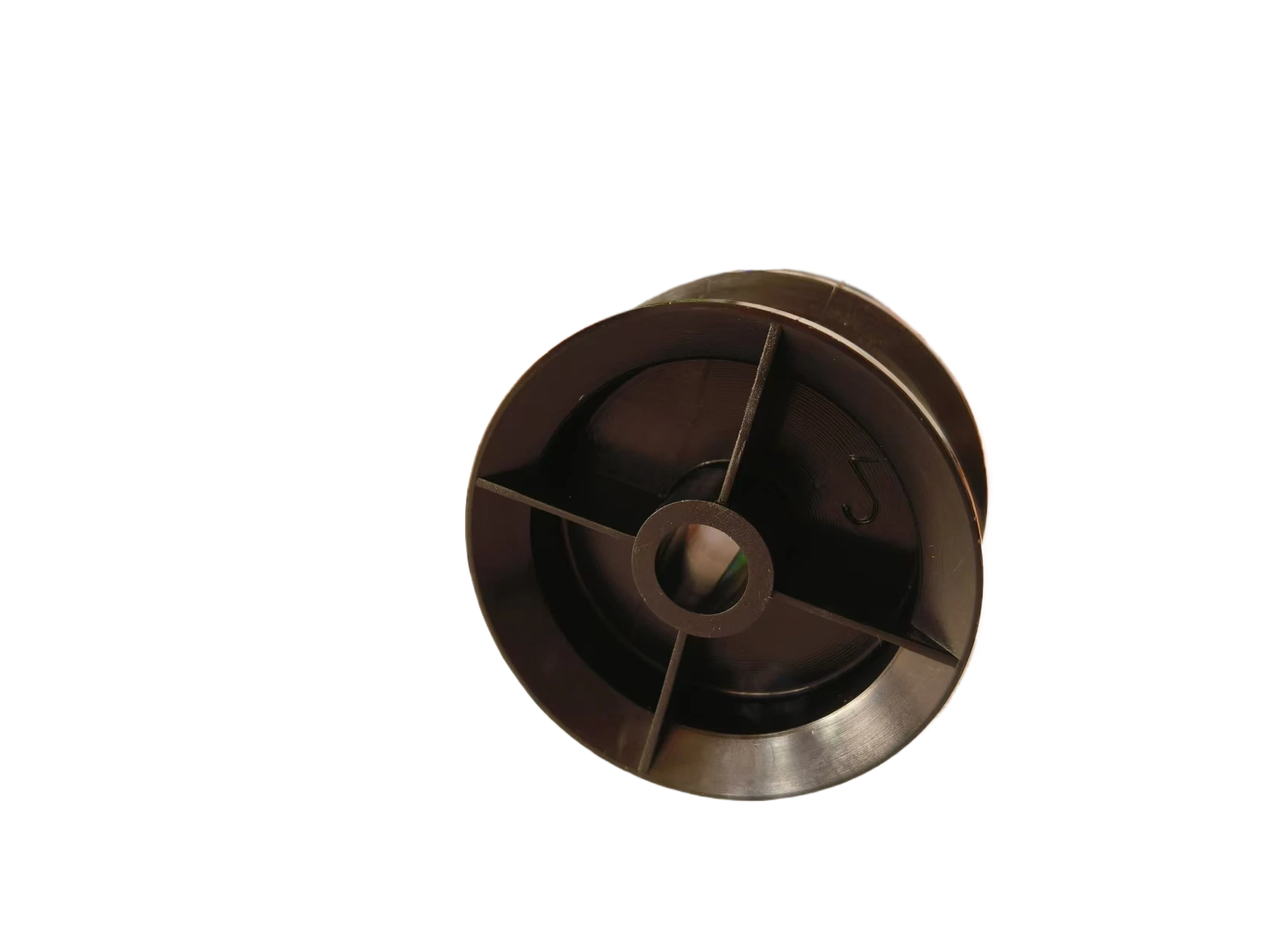
Manufacturing processes typically involve injection molding. This process requires precise control of several key parameters: melt temperature (typically 200-250°C for PP and PE, 180-220°C for PVC), mold temperature (30-60°C), injection pressure (60-100 MPa), and cooling rate. Mold design is crucial to prevent warping, sink marks, and weld lines. Internal ribbing and strategically placed material thickness variations are commonly employed to enhance structural rigidity and distribute stresses. Post-molding operations may include deburring, surface finishing (to improve aesthetics or reduce friction), and potentially, UV stabilization treatments to mitigate degradation from prolonged sun exposure. For specialized applications, insert molding can be utilized to integrate metal bushings or bearings directly into the wheel structure, enhancing load-bearing capacity and reducing wear. Quality control focuses on dimensional accuracy, material density, impact strength (measured via Izod or Charpy impact tests), and hardness (measured via Shore hardness tests). Polymer degradation is a critical concern; therefore, ensuring proper storage and handling of raw materials is essential to prevent oxidation and maintain optimal processing characteristics.
Performance & Engineering
The performance of a 24-inch plastic wheel is dictated by its ability to withstand static and dynamic loads, resist deformation, and maintain structural integrity over time. Force analysis involves calculating bending stresses, shear stresses, and compressive stresses induced by the applied load and the wheel's geometry. Factors such as load distribution, impact velocity, and the presence of any obstacles significantly impact stress levels. Environmental resistance is a critical consideration. UV exposure can lead to polymer chain scission, resulting in embrittlement and loss of impact strength. Temperature fluctuations can cause thermal expansion and contraction, potentially leading to cracking or warping. Chemical exposure (acids, bases, solvents) can cause swelling, degradation, or discoloration.
Compliance requirements vary depending on the intended application. For example, wheels used in food processing facilities must comply with FDA regulations regarding materials and sanitation. Wheels used in hazardous environments may require compliance with ATEX directives related to explosion protection. Engineering considerations often include selecting appropriate bearing types (e.g., ball bearings, roller bearings, or plain bushings) to minimize friction and maximize load capacity. Wheel hardness, determined by Shore durometer, impacts rolling resistance and traction. Finite Element Analysis (FEA) is frequently employed to simulate stress distributions and optimize wheel designs for specific load conditions and operating environments. Furthermore, assessing the coefficient of restitution during impact events is vital for applications requiring shock absorption.
Technical Specifications
| Parameter | Polypropylene (PP) | Polyethylene (PE) | Polyvinyl Chloride (PVC) | Units |
|---|---|---|---|---|
| Diameter | 24 | 24 | 24 | inches |
| Load Capacity (Static) | 250 | 300 | 200 | lbs |
| Shore Hardness | 60-70 | 55-65 | 70-80 | Shore D |
| Impact Strength (Izod) | 4-6 | 6-8 | 3-5 | ft-lbs/in |
| Tensile Strength | 35-45 | 30-40 | 50-60 | MPa |
| Operating Temperature Range | -20 to 80 | -40 to 60 | -10 to 60 | °C |
Failure Mode & Maintenance
Common failure modes for 24-inch plastic wheels include fatigue cracking (due to repeated loading), impact fracture (resulting from sudden impacts), creep deformation (slow deformation under sustained load), and environmental stress cracking (caused by the combined effects of stress and chemical exposure). UV degradation leads to embrittlement and reduced impact strength, manifested as surface cracks and eventual failure. Delamination can occur in composite wheels, where layers separate due to inadequate bonding. Oxidation, especially in PE and PP, can lead to material degradation over prolonged exposure to air and heat.
Preventative maintenance includes regular inspection for cracks, deformation, or discoloration. Lubrication of bearings (if applicable) is essential to reduce friction and wear. Avoidance of overloading is critical to prevent fatigue cracking and creep deformation. Protective coatings or UV stabilizers can be applied to mitigate the effects of UV exposure. Proper storage in a cool, dry environment protects against oxidation and degradation. In the event of damage, complete wheel replacement is generally recommended, as repairs to plastic wheels are often unreliable and compromise structural integrity. Careful consideration should be given to the cleaning agents used; harsh chemicals can accelerate polymer degradation.
Industry FAQ
Q: What is the primary difference between PP and PE wheels in terms of long-term durability?
A: While PE generally exhibits higher impact resistance, PP often demonstrates superior resistance to certain chemicals and creep deformation. Long-term durability hinges on the specific operating environment; PE is preferable where impacts are frequent, while PP is advantageous where chemical exposure and sustained loads are primary concerns. Furthermore, the grade of each polymer (e.g. HDPE vs LDPE, homopolymer PP vs copolymer PP) greatly affects durability.
Q: How does wheel hardness (Shore D) affect performance on different surfaces?
A: Higher Shore D hardness generally indicates greater resistance to abrasion and deformation, making the wheel suitable for hard, smooth surfaces. Lower Shore D hardness provides better grip and shock absorption on uneven or rough surfaces, but may exhibit increased wear. The optimal hardness depends on the intended application and surface characteristics.
Q: What are the implications of UV exposure on the lifespan of a PVC wheel?
A: PVC is inherently susceptible to UV degradation, which leads to chain scission and embrittlement. Prolonged UV exposure will cause discoloration, surface cracking, and ultimately, structural failure. UV stabilizers are crucial for mitigating this effect, but even with stabilization, the lifespan is reduced compared to PP or PE in similar conditions.
Q: Can plastic wheels be used in high-temperature environments? If so, what materials are best suited?
A: The temperature resistance of plastic wheels is limited. Standard PP and PE wheels typically have a maximum operating temperature of around 60-80°C. For higher temperatures, specialized polymers such as PPS (Polyphenylene Sulfide) or PEEK (Polyether Ether Ketone) may be considered, though these come at a significantly higher cost.
Q: What are the key considerations when selecting a wheel for a corrosive environment?
A: Chemical resistance is paramount. Polypropylene (PP) and high-density polyethylene (HDPE) generally exhibit excellent resistance to a wide range of chemicals. PVC offers good resistance to acids and bases but may be affected by solvents. Always consult a chemical compatibility chart to ensure the chosen material is compatible with the specific corrosive substances present in the environment.
Conclusion
24-inch plastic wheels provide a versatile and cost-effective solution for a wide array of material handling and mobility applications. Selecting the optimal material (PP, PE, PVC) and understanding the intricacies of the injection molding process are critical for achieving desired performance characteristics. Careful consideration of environmental factors, load capacity requirements, and potential failure modes is essential for ensuring long-term reliability and minimizing maintenance costs.
Future advancements in polymer technology may lead to the development of enhanced plastic wheel materials with improved impact resistance, UV stability, and temperature resistance. Furthermore, incorporating recycled plastics into wheel manufacturing can contribute to sustainability efforts without compromising performance. Continuing research into optimized wheel designs and bearing technologies will further enhance load-bearing capacity and reduce rolling resistance, leading to improved efficiency and durability.