
Introduction
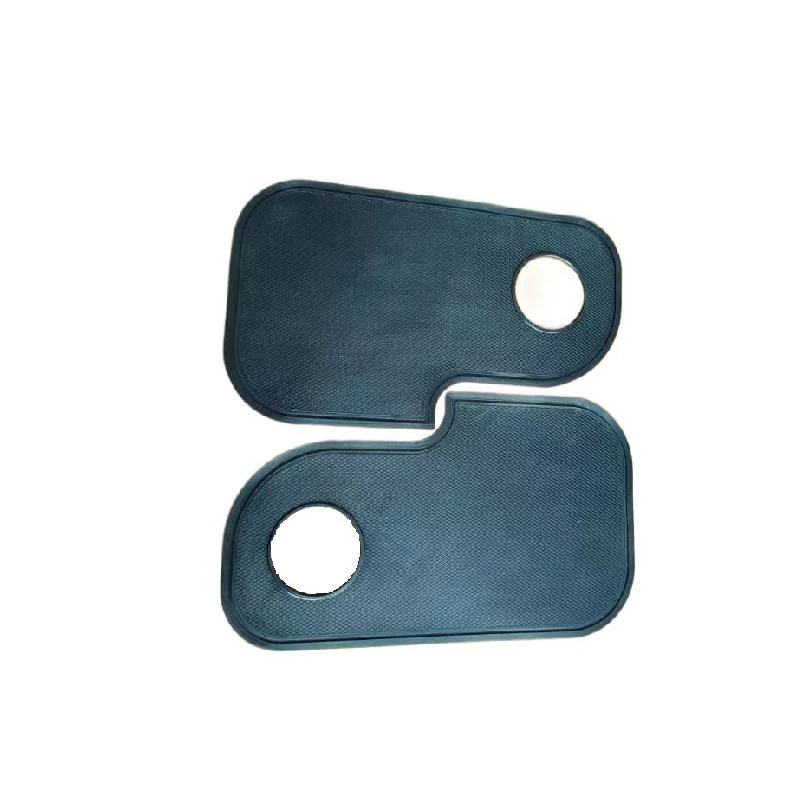
Steel plate washers are critical fastening components utilized across a broad spectrum of industrial applications, including construction, automotive manufacturing, and heavy machinery assembly. Positioned within the supply chain between steel production and finished goods manufacturing, these washers function as load distribution devices, preventing damage to mating surfaces and maintaining consistent clamping force. Their primary performance characteristics include load-bearing capacity, resistance to deformation, and compatibility with specified bolt and nut systems. The core industry pain point addressed by advanced steel plate washer design and material selection revolves around ensuring long-term joint reliability, minimizing maintenance requirements, and preventing catastrophic failures resulting from fastener loosening or material degradation. This guide provides an in-depth exploration of steel plate washer technology, encompassing material science, manufacturing processes, performance engineering, failure analysis, and relevant industry standards.
Material Science & Manufacturing
The most common material for steel plate washers is carbon steel, specifically AISI 1018 and AISI 1045 due to their balance of strength, ductility, and cost-effectiveness. However, applications requiring higher corrosion resistance often necessitate stainless steel grades such as 304, 316, or even duplex stainless steels. Alloy steels, including those incorporating chromium, nickel, and molybdenum, are used in high-stress or extreme temperature environments. The physical properties influencing washer performance include tensile strength (typically 550-700 MPa for carbon steel, 800-1000 MPa for alloy steels, and 500-700 MPa for stainless steels), yield strength (250-400 MPa for carbon steel, 400-600 MPa for alloy steels, and 200-400 MPa for stainless steels), hardness (measured using Rockwell C scale, typically 40-60 HRC), and elongation (15-25%).
Manufacturing processes typically involve blanking from steel coils, followed by forming through progressive die stamping. Critical parameters during stamping include die geometry, punch and die clearance, and stamping speed. Precise control of these parameters is crucial to avoid material thinning, cracking, or deformation. Subsequent processes may include deburring, cleaning (typically using alkaline or phosphating solutions), and surface treatments such as zinc plating, black oxide coating, or powder coating to enhance corrosion resistance. Heat treatment, such as hardening and tempering, is applied to specific steel grades to achieve desired mechanical properties. Quality control measures include dimensional inspection using calipers and micrometers, hardness testing, and visual inspection for defects like cracks, burrs, and surface imperfections. Welding is generally not utilized in the manufacturing of standard steel plate washers, as the process can introduce localized material property changes that compromise performance. Specialized washers, however, may incorporate welded features for specific applications.
Performance & Engineering
The performance of a steel plate washer is fundamentally governed by its ability to distribute load evenly and maintain clamping force over time. Force analysis considers the washer’s geometry (inner diameter, outer diameter, thickness), material properties (Young’s modulus, Poisson’s ratio), and the applied load. Finite Element Analysis (FEA) is frequently employed to model stress distribution within the washer under various loading conditions, optimizing geometry to minimize stress concentration and prevent failure. Environmental resistance is crucial; exposure to corrosive environments (salt spray, humidity, industrial chemicals) can lead to oxidation and degradation, reducing the washer’s load-bearing capacity. Surface treatments, as mentioned previously, are vital in mitigating corrosion. Compliance requirements, dictated by industry-specific standards (e.g., automotive specifications, aerospace regulations), often mandate specific material compositions, mechanical properties, and surface finish requirements. Functional implementation includes consideration of the washer's interaction with the bolt, nut, and mating surfaces. Washers are often designed with specific inner diameters to accommodate different bolt sizes and tolerances, ensuring a proper fit and preventing loosening.
Creep, the tendency of a solid material to move slowly or permanently deform under the influence of persistent mechanical stresses, is a critical performance consideration, especially in applications involving sustained high loads. Fatigue resistance is also paramount; repeated loading and unloading can lead to crack initiation and propagation, ultimately causing failure. The design of the washer, particularly the presence of any sharp corners or geometric discontinuities, significantly impacts its fatigue life. Selection of appropriate materials and surface treatments plays a critical role in enhancing fatigue resistance.
Technical Specifications
| Material Grade | Tensile Strength (MPa) | Hardness (HRC) | Inner Diameter (mm) |
|---|---|---|---|
| AISI 1018 Carbon Steel | 580-650 | 45-55 | 6 |
| AISI 1045 Carbon Steel | 620-700 | 50-60 | 8 |
| 304 Stainless Steel | 510-600 | 40-50 | 10 |
| 316 Stainless Steel | 550-650 | 45-55 | 12 |
| SAE 4340 Alloy Steel | 860-1000 | 55-65 | 15 |
| Duplex Stainless Steel | 800-1100 | 50-60 | 20 |
Failure Mode & Maintenance
Common failure modes for steel plate washers include fatigue cracking, corrosion-induced degradation, and plastic deformation. Fatigue cracking typically initiates at stress concentration points, such as the inner or outer diameter edges, and propagates under cyclic loading. Corrosion, particularly in harsh environments, can lead to pitting, crevice corrosion, and general material loss, reducing the washer’s section thickness and load-bearing capacity. Plastic deformation occurs when the applied load exceeds the washer’s yield strength, causing permanent deformation and loss of clamping force. Oxidation, particularly at elevated temperatures, can lead to scaling and embrittlement of the steel. Delamination, while less common in stamped washers, can occur if there are defects in the material or improper forming processes.
Preventive maintenance includes regular visual inspections to identify signs of corrosion, cracking, or deformation. Torque monitoring during assembly is crucial to ensure proper clamping force and prevent over-tightening or under-tightening. Lubrication of the fastener assembly can reduce friction and prevent galling, minimizing stress on the washer. For applications exposed to corrosive environments, periodic replacement of washers is recommended based on exposure severity and material compatibility. In cases of suspected fatigue damage, non-destructive testing methods, such as ultrasonic testing or dye penetrant inspection, can be employed to detect cracks. When selecting replacement washers, it’s crucial to match the original material specifications and dimensions to maintain the integrity of the joint. Consider upgrading to a more corrosion-resistant material grade for particularly aggressive environments.
Industry FAQ
Q: What is the impact of washer thickness on clamping force?
A: Washer thickness directly influences the distribution of clamping force. Increasing thickness generally leads to a more uniform distribution, reducing stress concentration on the mating surfaces. However, excessive thickness can introduce additional stress and potentially reduce joint stiffness. The optimal thickness is determined by the application’s specific load requirements and material properties.
Q: How does the material of the washer affect its performance in a corrosive environment?
A: The material’s corrosion resistance is paramount. Carbon steel washers are susceptible to rust and degradation in corrosive environments, while stainless steel and alloy steel washers offer improved resistance. Duplex stainless steel provides even greater corrosion protection. Surface treatments like zinc plating or powder coating can further enhance corrosion resistance, but their effectiveness depends on the coating’s quality and integrity.
Q: What are the key differences between hardened and unhardened steel washers?
A: Hardened steel washers exhibit higher yield strength and tensile strength, making them more resistant to plastic deformation and fatigue. However, they are also more brittle and may be susceptible to cracking under impact loading. Unhardened washers are more ductile and less prone to brittle fracture but have lower load-bearing capacity.
Q: Can washers be reused after disassembly?
A: Reusing washers is generally not recommended, particularly in critical applications. Disassembly can damage the washer’s surface, introduce corrosion, or alter its mechanical properties. Using a new washer ensures consistent clamping force and prevents potential failure. In non-critical applications, a thorough inspection for damage before reuse may be acceptable, but caution is advised.
Q: What standards govern the dimensional tolerances of steel plate washers?
A: Dimensional tolerances are typically governed by industry-specific standards such as ISO 7088, DIN 6916, and ASTM F849. These standards specify acceptable variations in inner diameter, outer diameter, thickness, and hole diameter, ensuring interchangeability and compatibility with other fasteners.
Conclusion
Steel plate washers, while seemingly simple components, are fundamental to the integrity and long-term reliability of bolted joints across numerous industries. Understanding their material science, manufacturing processes, and performance characteristics is crucial for selecting the appropriate washer for a given application. The selection process must consider not only the applied load and environmental conditions but also relevant industry standards and compliance requirements.
Future advancements in steel plate washer technology will likely focus on the development of new materials with enhanced corrosion resistance and fatigue life, as well as the implementation of advanced surface treatments and coatings. The increasing use of FEA and simulation tools will further optimize washer geometry and performance, minimizing weight and maximizing efficiency. A continued emphasis on quality control and adherence to rigorous industry standards will be essential for ensuring the consistent performance and reliability of these critical fastening components.