
Introduction
Large metal O-rings are critical sealing components employed across a vast spectrum of industrial applications, particularly within high-pressure hydraulic systems, aerospace engineering, and oil & gas exploration. Unlike elastomeric O-rings, metal O-rings provide superior performance in extreme temperatures, chemically aggressive environments, and applications demanding minimal compression set. Their functionality relies on metallic elasticity – the ability of the ring to deform and seal under load – achieved through material selection and precision manufacturing. The industry chain positions large metal O-rings as a final, yet essential, component delivered to OEMs or MRO (Maintenance, Repair, and Overhaul) sectors. Core performance characteristics revolve around sealing pressure capacity, temperature resistance, chemical compatibility, and long-term reliability in dynamic applications. A primary industry pain point involves ensuring consistent dimensional accuracy across large diameter rings to maintain sealing integrity, and selecting appropriate materials to prevent galvanic corrosion in mixed-metal systems.
Material Science & Manufacturing
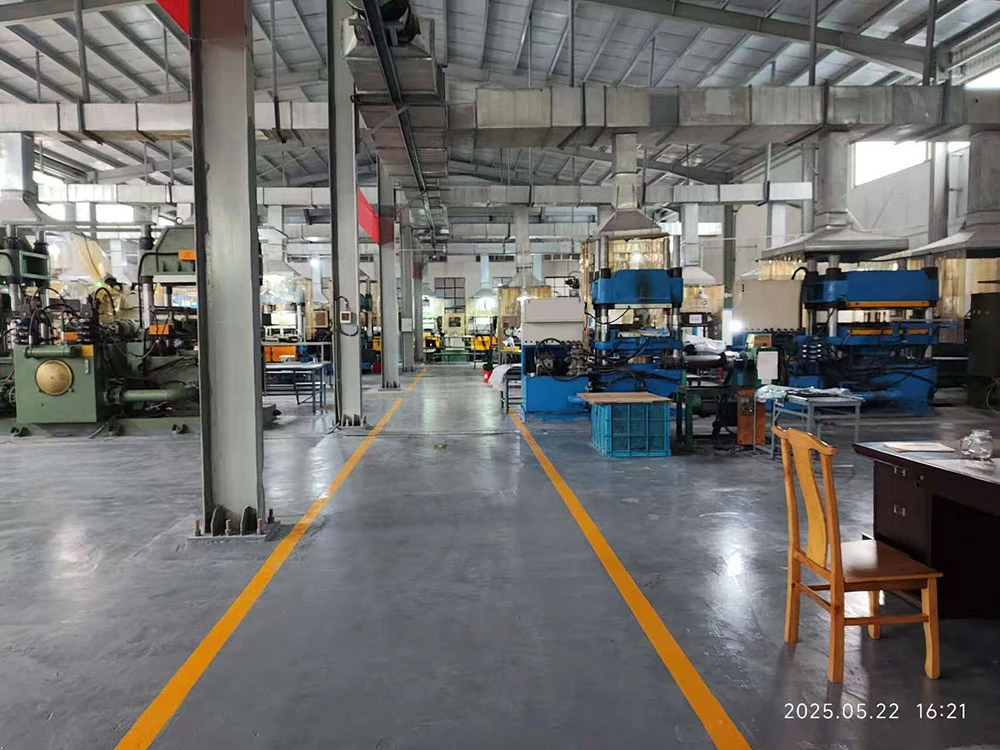
The predominant materials for large metal O-rings are stainless steels (304, 316, 17-4PH), high-nickel alloys (Inconel X-718, Hastelloy C-276), and, in specialized applications, titanium alloys. Stainless steel 304 exhibits good corrosion resistance and weldability, while 316 incorporates molybdenum for enhanced resistance to chloride pitting. Inconel X-718 provides exceptional high-temperature strength and oxidation resistance. Material selection is governed by the intended operating environment, pressure, and temperature. Manufacturing processes typically involve cold forming (rolling, stamping) from pre-sized wire or strip stock, followed by precision machining and finishing. Critical parameters during cold forming include maintaining consistent material flow to avoid defects like laps or cracks. Stress relieving heat treatments are essential to minimize residual stresses introduced during forming, preventing premature failure. Surface finishing, such as electropolishing or passivation, enhances corrosion resistance and minimizes surface friction. Welding processes (laser welding, plasma arc welding) are utilized for creating larger rings from smaller sections, requiring precise control of heat input to maintain material integrity and avoid weld distortion. Dimensional tolerances are tightly controlled using coordinate measuring machines (CMMs) and non-destructive testing (NDT) methods like liquid penetrant inspection and magnetic particle inspection.
Performance & Engineering
Performance analysis of large metal O-rings necessitates a detailed understanding of contact mechanics and stress distribution within the seal. Finite element analysis (FEA) is routinely employed to model the O-ring’s deformation under pressure, predicting contact stress and sealability. The sealing force is directly related to the ring’s cross-sectional diameter and the applied pressure. Material hardness (Rockwell C scale) influences the ring’s ability to conform to surface irregularities. Environmental resistance considerations include chemical compatibility with the fluid being sealed, and the potential for corrosion or erosion. Galvanic corrosion is a significant concern when using metal O-rings in contact with dissimilar metals; careful material selection or the use of electrically insulating coatings is required. Compliance requirements depend on the application. Aerospace applications adhere to stringent standards defined by SAE Aerospace Material Specification (AMS) standards. Oil & gas applications often require compliance with API (American Petroleum Institute) standards related to wellhead equipment and downhole tools. Functional implementation often involves designing grooves with appropriate dimensions and surface finish to ensure proper O-ring seating and prevent extrusion. The groove geometry should account for the O-ring’s operating pressure and temperature, as well as the material’s elastic properties.
Technical Specifications
| Material | Tensile Strength (MPa) | Hardness (Rockwell C) | Maximum Operating Temperature (°C) |
|---|---|---|---|
| Stainless Steel 304 | 517 - 724 | 85-95 | 350 |
| Stainless Steel 316 | 550 - 860 | 88-100 | 350 |
| Inconel X-718 | 1034 - 1379 | 35-45 | 700 |
| Hastelloy C-276 | 620 - 896 | 30-40 | 400 |
| Titanium Alloy (Grade 5) | 895 - 1100 | 30-35 | 400 |
| Monel 400 | 483 - 620 | 65-75 | 427 |
Failure Mode & Maintenance
Common failure modes for large metal O-rings include fatigue cracking due to cyclic loading, extrusion caused by excessive pressure, corrosion resulting from chemical attack, and damage from improper installation. Fatigue cracking initiates at stress concentrators, such as surface defects or geometric discontinuities. Extrusion occurs when the O-ring is forced into the gap between mating components, leading to permanent deformation and loss of sealing capability. Corrosion can manifest as pitting, crevice corrosion, or galvanic corrosion. Improper installation – including twisting, stretching, or nicking the O-ring – can compromise its sealing performance. Maintenance procedures should include regular visual inspection for signs of damage, such as cracks, corrosion, or deformation. Lubrication with a compatible lubricant can reduce friction and wear, extending the O-ring’s service life. Periodic replacement is essential, particularly in critical applications where failure could have catastrophic consequences. Preventive maintenance programs should incorporate scheduled O-ring replacement based on operating conditions and application criticality. Failure analysis should involve microscopic examination of fractured surfaces to identify the root cause of failure, guiding material selection and design improvements.
Industry FAQ
Q: What is the impact of surface finish on the performance of a large metal O-ring?
A: Surface finish significantly impacts sealing performance. A rougher surface finish on the O-ring or the mating groove can create leakage paths and accelerate wear. Electropolishing or honing is often employed to achieve a smooth, low-friction surface that enhances sealing capability and reduces the risk of damage during installation. A Ra value of 16 µin or less is generally recommended for critical applications.
Q: How do you mitigate the risk of galvanic corrosion when using a metal O-ring with a dissimilar metal housing?
A: Several strategies can mitigate galvanic corrosion. Selecting materials with similar electrochemical potentials is the primary approach. Alternatively, using an electrically insulating coating on either the O-ring or the housing can isolate the metals. Applying a corrosion inhibitor to the sealing fluid can also help to reduce corrosion rates. Careful design to avoid crevices and stagnant areas is also crucial.
Q: What is the best method for determining the appropriate groove dimension for a large metal O-ring?
A: Groove dimensions are critical for proper O-ring function. The groove width should be slightly wider than the O-ring’s cross-section to allow for easy installation and compression. The groove depth should be sufficient to prevent extrusion under pressure. Manufacturers typically provide groove dimension recommendations based on O-ring size, material, and operating pressure. FEA simulations can also be used to optimize groove geometry.
Q: How does temperature affect the performance of a metal O-ring?
A: Temperature affects the O-ring’s dimensions and material properties. Elevated temperatures can cause the O-ring to expand, potentially reducing its sealing force. Conversely, low temperatures can cause the O-ring to contract, potentially leading to leakage. Material selection is critical to ensure adequate performance across the operating temperature range. Thermal expansion coefficients should be considered when designing the sealing system.
Q: What are the key differences between a static and a dynamic metal O-ring application and how does this affect material selection?
A: Static applications involve no relative motion between the O-ring and mating components, while dynamic applications involve reciprocating or rotary motion. Dynamic applications require materials with higher wear resistance and lower friction coefficients. Materials like PTFE-coated metal O-rings are often used in dynamic seals to minimize friction and wear. Fatigue resistance is also more critical in dynamic applications due to the cyclic loading.
Conclusion
Large metal O-rings represent a sophisticated sealing solution exceeding the capabilities of elastomeric seals in demanding industrial environments. Successful implementation hinges on a thorough understanding of material science, manufacturing processes, and engineering principles. Precise material selection based on chemical compatibility, temperature range, and pressure requirements is paramount. Rigorous adherence to dimensional tolerances, coupled with appropriate surface finishing and installation procedures, are critical for ensuring long-term sealing performance and minimizing failure rates.
Future trends will likely focus on the development of advanced materials with enhanced corrosion resistance and high-temperature capabilities, along with the integration of smart sealing technologies that incorporate sensors for real-time monitoring of seal performance. Continued advancements in FEA modeling and NDT techniques will also contribute to improved design and quality control, ultimately leading to more reliable and durable sealing solutions.