
Introduction
High-pressure metal seals are critical components in applications demanding leak-tight performance under extreme conditions. These seals, distinct from polymeric or elastomeric seals, rely on the inherent properties of metals – ductility, strength, and resistance to degradation – to maintain a barrier against fluids and gases at elevated pressures and temperatures. Their position within the industrial chain lies predominantly in industries such as oil and gas, aerospace, chemical processing, and high-performance automotive, where failure is not an option. Core performance characteristics include pressure retention, temperature resistance, chemical compatibility, and long-term reliability. Unlike softer seal materials, metal seals achieve sealing through plastic deformation, mechanical spring force, or a combination of both, creating a metallic bond between the sealing surfaces. The selection of appropriate metal seal design and material is fundamentally linked to the operational parameters of the application, and understanding these parameters is crucial for preventing premature failure and ensuring system integrity.
Material Science & Manufacturing
The primary materials used in high-pressure metal seal manufacturing include stainless steels (304, 316, 17-4 PH), Inconel alloys (718, 625), Hastelloy alloys, titanium alloys, and occasionally, specialized nickel alloys. Stainless steels offer good corrosion resistance and moderate temperature capabilities, making them suitable for less demanding applications. Inconel and Hastelloy alloys provide superior resistance to high temperatures and aggressive chemical environments. Titanium alloys excel in lightweight applications requiring high strength-to-weight ratios. Material properties such as yield strength, tensile strength, elongation, and hardness are carefully controlled during material selection. Manufacturing processes vary based on seal type and application requirements. Common methods include:
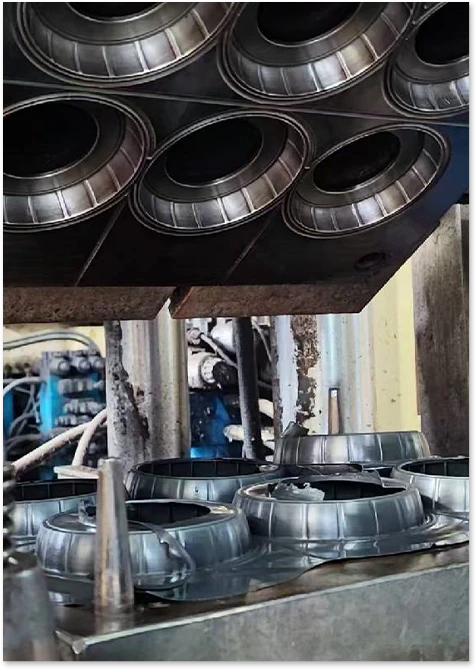
- Cold Forming: Used for creating simple ring seals with minimal material waste. Precise control of forming parameters (pressure, speed, die geometry) is essential to avoid cracking and maintain dimensional accuracy.
- Machining: Provides high precision and allows for complex geometries, including profiled seals and seals with features like anti-extrusion grooves. CNC machining is dominant.
- Powder Metallurgy (PM): Enables the creation of near-net-shape seals with complex compositions and porosity control. PM involves compacting metal powders followed by sintering to achieve desired density and strength.
- Electroforming: Used for producing thin-walled, high-precision seals with intricate designs. This process involves electrodepositing metal onto a mandrel, followed by mandrel removal.
- Welding: Used to join multiple components in specialized seal designs, such as those requiring bimetallic construction. Gas Tungsten Arc Welding (GTAW) is typically employed for precise control.
Parameter control during manufacturing is critical. For cold forming, die lubrication and temperature management prevent galling and ensure smooth deformation. Machining requires precise tool geometry and cutting parameters to achieve desired surface finish and dimensional tolerances. PM demands careful powder characterization, compaction pressure control, and sintering atmosphere regulation. Heat treatment is frequently employed to optimize mechanical properties and relieve residual stresses.
Performance & Engineering
The performance of high-pressure metal seals is dictated by several key engineering considerations. Force analysis is paramount, particularly in determining the required spring force or bolt load to achieve adequate sealing. Finite Element Analysis (FEA) is routinely used to model seal deformation under pressure and temperature, predicting contact stress and identifying potential failure points. Environmental resistance is a critical factor, necessitating careful material selection based on the chemical composition of the contained fluid or gas. Corrosion, erosion, and galvanic corrosion are all potential concerns. Compliance requirements vary by industry. Aerospace applications demand adherence to stringent standards like AMS and SAE, while oil and gas applications require compliance with API standards. Functional implementation often involves careful design of the sealing groove and mating surface. Surface finish, groove geometry, and material compatibility all influence sealing performance. Understanding the Poisson's ratio of the metal, the contact stress between sealing surfaces, and the effect of thermal expansion/contraction is crucial for ensuring long-term reliability. Specifically, the seal must withstand the combined stresses of internal pressure, external load, and thermal cycling without exceeding its yield strength or experiencing fatigue failure. Anti-extrusion features are often incorporated into the seal design to prevent material creep and extrusion into the gap under high pressure.
Technical Specifications
| Parameter | Stainless Steel 316 | Inconel 718 | Hastelloy C-276 | Titanium Alloy (Ti-6Al-4V) |
|---|---|---|---|---|
| Tensile Strength (MPa) | 517 | 1000 | 620 | 895 |
| Yield Strength (MPa) | 205 | 690 | 240 | 828 |
| Maximum Operating Temperature (°C) | 315 | 650 | 538 | 427 |
| Corrosion Resistance | Good | Excellent | Superior | Good (requires passivation) |
| Pressure Rating (MPa) | Up to 100 | Up to 200 | Up to 150 | Up to 120 |
| Hardness (Rockwell C) | 85-95 | 35-45 | 60-75 | 30-40 |
Failure Mode & Maintenance
High-pressure metal seals, while robust, are susceptible to various failure modes. Fatigue cracking can occur due to cyclic loading, particularly in applications involving thermal cycling or pressure fluctuations. Galling, a form of adhesive wear, can occur between mating surfaces if lubrication is insufficient or material compatibility is poor. Creep, the time-dependent deformation under sustained stress, is a concern at elevated temperatures, leading to loss of sealing force. Corrosion, as previously mentioned, can weaken the seal material and compromise its integrity. Erosion caused by high-velocity fluids can also degrade the seal surface. Oxidation can be significant at high temperatures. Hydrogen embrittlement, particularly in high-strength alloys, can lead to premature failure in hydrogen-containing environments. Maintenance strategies include regular inspection for signs of wear, corrosion, or damage. Lubrication with compatible materials is essential to reduce friction and prevent galling. Periodic retorquing of bolted connections ensures adequate sealing force. In cases of severe corrosion or wear, seal replacement is necessary. Non-destructive testing methods, such as dye penetrant inspection and ultrasonic testing, can be used to detect subsurface cracks and defects. Proper storage and handling of seals are also crucial to prevent contamination and damage.
Industry FAQ
Q: What is the primary difference between a C-ring and an O-ring metal seal in terms of pressure capability?
A: C-rings and O-rings represent fundamentally different sealing mechanisms. O-rings rely on elastomeric deformation to create a seal, limiting their pressure capacity. C-rings, being metallic, achieve sealing through spring force and material deformation, offering significantly higher pressure ratings – often exceeding 100 MPa. C-rings are better suited for high-pressure applications where elastomers would fail.
Q: How does the surface finish of the sealing groove affect the performance of a metal seal?
A: The surface finish of the sealing groove is critical. A rough surface finish can lead to increased friction, accelerated wear, and potential leakage. An excessively smooth surface may not provide sufficient grip for the seal material. An optimal surface finish – typically in the range of Ra 0.8 to 1.6 μm – provides a balance between friction, wear resistance, and sealing force.
Q: What considerations are important when selecting a metal seal material for use with corrosive media?
A: Material selection must prioritize corrosion resistance. Alloys like Hastelloy C-276 and Inconel 718 offer exceptional resistance to a wide range of corrosive environments. The specific corrosive media (acid, base, salt solution) must be considered, as different alloys exhibit varying levels of resistance. Electrochemical compatibility with other components in the system is also vital to avoid galvanic corrosion.
Q: Can metal seals be used in vacuum applications?
A: Yes, metal seals are frequently used in vacuum applications. Their low permeability and ability to maintain a tight seal even at extremely low pressures make them ideal for this purpose. However, surface cleanliness is paramount, as any contaminants can outgas and degrade the vacuum level. Specialized vacuum-baked seals are often used to minimize outgassing.
Q: What are the implications of thermal expansion and contraction on the performance of a metal seal?
A: Thermal expansion and contraction can significantly affect sealing performance. If the seal and the mating component have different coefficients of thermal expansion, temperature changes can alter the contact stress and potentially lead to leakage. Seal designs often incorporate features to accommodate thermal expansion, such as spring energizers or relief features in the groove. FEA analysis is crucial for predicting and mitigating the effects of thermal stresses.
Conclusion
High-pressure metal seals represent a critical technology for industries demanding uncompromising reliability in demanding environments. Their performance is inextricably linked to material selection, manufacturing precision, and a thorough understanding of engineering principles. Selecting the optimal material and seal design requires careful consideration of operating pressure, temperature, chemical compatibility, and potential failure modes. A proactive approach to maintenance, including regular inspection and lubrication, is vital for extending seal life and preventing catastrophic failures.
Future trends in high-pressure metal seal technology will likely focus on the development of new alloys with enhanced corrosion resistance and higher temperature capabilities. Advanced manufacturing techniques, such as additive manufacturing (3D printing), will enable the creation of seals with more complex geometries and tailored properties. Increased reliance on digital twins and predictive maintenance algorithms will optimize seal performance and minimize downtime.