
Introduction
Bonded seal dimensions represent a critical aspect of sealing system integrity across numerous industries, including aerospace, automotive, oil and gas, and electronics. These dimensions, encompassing factors like cross-sectional diameter, compression set, and bond line thickness, directly influence the seal's ability to maintain a pressure barrier, prevent fluid leakage, and withstand environmental stressors. The technical position of bonded seals lies between static and dynamic sealing applications, frequently employed when complex geometries or tight tolerances require a pre-formed sealing element. Unlike traditional O-rings or gaskets relying solely on compression, bonded seals integrate a polymeric sealing element with a metallic carrier, offering enhanced dimensional stability and resistance to extrusion. Core performance parameters include sealing force, operating temperature range, chemical compatibility, and long-term durability, all inextricably linked to precise dimensional control.
Material Science & Manufacturing
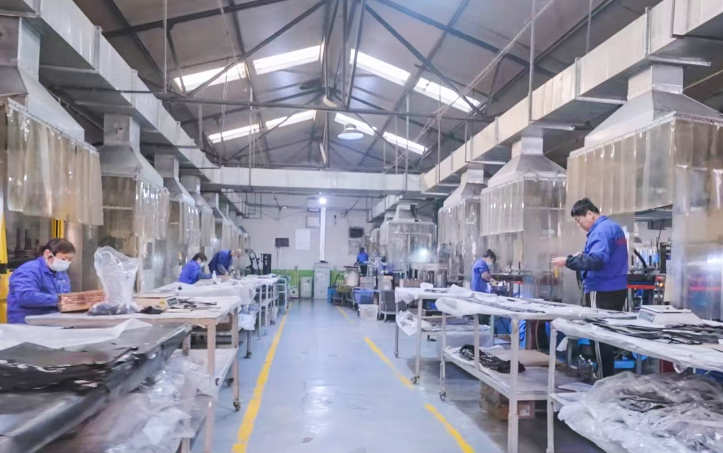
Bonded seals commonly utilize elastomeric materials such as Fluoroelastomers (FKM/Viton), Perfluoroelastomers (FFKM/Kalrez), Nitrile Rubber (NBR), Silicone (VMQ), and Ethylene Propylene Diene Monomer (EPDM) as the sealing component. The selection hinges on the application’s temperature, pressure, and fluid compatibility requirements. FKM offers broad chemical resistance and temperature stability (-20°C to 205°C), while FFKM provides superior resistance to aggressive chemicals and higher temperatures (up to 327°C). The metallic carrier is typically constructed from carbon steel, stainless steel (304, 316), or alloys like Hastelloy, chosen for corrosion resistance and mechanical strength. Manufacturing involves a multi-stage process: (1) Polymer mixing and molding: raw elastomer is compounded with fillers, curing agents, and process aids, then molded into the desired shape. (2) Surface preparation: the metallic carrier undergoes cleaning and potentially surface treatment (e.g., grit blasting, chemical etching) to enhance adhesion. (3) Bonding: the elastomer is bonded to the metallic carrier using vulcanization – a chemical process involving heat and pressure, forming a strong covalent bond. Critical parameters include temperature uniformity (±1°C), pressure control (±0.1 MPa), and cure time, all impacting bond strength and seal performance. (4) Dimensional inspection: precise measurement of seal geometry, bond line thickness (typically 0.05-0.25 mm), and overall dimensions is performed using coordinate measuring machines (CMMs) and optical comparators.
Performance & Engineering
The performance of a bonded seal is heavily influenced by its ability to withstand compressive forces and maintain sealing integrity under varying conditions. Finite element analysis (FEA) is frequently employed to model stress distribution within the seal during compression, predicting potential failure points and optimizing geometry. Factors considered include the seal’s hardness (Shore A), compression set (a measure of permanent deformation after prolonged compression), and creep resistance (deformation under constant load). Environmental resistance is paramount, particularly in harsh conditions. Exposure to ozone, ultraviolet radiation, and corrosive fluids can lead to material degradation and loss of sealing effectiveness. Therefore, material selection and protective coatings (e.g., PTFE, ceramic) are crucial. Compliance requirements dictate adherence to industry standards, such as those set by SAE Aerospace, ISO 16750, and specific customer specifications. Engineering considerations also encompass thermal expansion mismatch between the elastomer and metallic carrier, which can induce stress and potentially compromise the bond line. Proper seal design accounts for this mismatch, minimizing stress concentration and ensuring long-term reliability. The calculation of sealing force involves consideration of the seal's cross-sectional area, material modulus, and applied compression.
Technical Specifications
| Parameter | Typical Value (FKM Bonded Seal) | Typical Value (FFKM Bonded Seal) | Testing Standard |
|---|---|---|---|
| Operating Temperature Range | -20°C to 205°C | -20°C to 327°C | ASTM D573 |
| Maximum Pressure | 20 MPa | 30 MPa | SAE AS5271 |
| Compression Set (24hr @ 150°C) | <15% | <10% | ASTM D395 |
| Tensile Strength | 14.5 MPa | 18.6 MPa | ASTM D412 |
| Hardness (Shore A) | 70 ± 5 | 60 ± 5 | ASTM D2240 |
| Bond Strength (to Steel) | >5 MPa | >7 MPa | ASTM D429 |
Failure Mode & Maintenance
Bonded seal failure can manifest in several forms. Extrusion failure occurs when the elastomer is forced into the clearance gap between mating components due to excessive pressure, especially in dynamic applications. Bond failure, characterized by separation of the elastomer from the metallic carrier, can result from inadequate surface preparation, improper vulcanization, or thermal cycling stresses. Chemical degradation causes swelling, cracking, or embrittlement of the elastomer due to incompatible fluids. Fatigue cracking arises from cyclic loading, initiating at stress concentration points. Oxidation leads to material hardening and loss of elasticity over time, particularly at elevated temperatures. Maintenance primarily focuses on preventative measures. Regular inspection for signs of cracking, swelling, or deformation is crucial. Proper storage conditions (cool, dry, away from direct sunlight) minimize degradation. When replacing a bonded seal, ensure compatibility with the intended fluid and operating conditions. Avoid using abrasive cleaners or solvents that could damage the elastomer. Detailed failure analysis, including microscopic examination of fracture surfaces, can identify root causes and inform design improvements or material selection.
Industry FAQ
Q: What is the impact of bond line thickness variation on seal performance?
A: Variations in bond line thickness can significantly affect seal performance. A thinner bond line may lead to premature failure due to reduced elastomer support and increased stress concentration. Conversely, an excessively thick bond line can hinder proper compression and reduce sealing force. Maintaining tight control over bond line thickness (typically within ±0.025mm) is critical for consistent performance.
Q: How does thermal cycling affect the longevity of a bonded seal?
A: Thermal cycling induces stresses due to differences in thermal expansion coefficients between the elastomer and metallic carrier. Repeated expansion and contraction can lead to bond fatigue and eventual failure. Selecting materials with closely matched thermal expansion coefficients and incorporating design features that accommodate thermal stresses can mitigate this effect.
Q: What are the key considerations for selecting the metallic carrier material?
A: The metallic carrier material should be chosen based on its corrosion resistance, mechanical strength, and compatibility with the operating environment. Stainless steel is a common choice for general applications, while Hastelloy or other high-alloy materials are preferred for highly corrosive environments. Consideration should also be given to the carrier's impact on the overall weight and cost of the assembly.
Q: Can bonded seals be used in dynamic applications, such as reciprocating shafts?
A: While primarily used in static applications, bonded seals can be employed in limited dynamic applications with careful consideration. Factors such as shaft speed, surface finish, and lubrication are crucial. Specialized designs with low-friction coatings or PTFE face seals may be necessary to minimize wear and maintain sealing integrity.
Q: What testing is recommended to validate the performance of a new bonded seal design?
A: Comprehensive testing is essential. Recommended tests include pressure testing, temperature cycling, compression set analysis, chemical compatibility testing, and burst testing. Accelerated aging studies can provide insights into long-term durability. For critical applications, FEA modeling and prototype validation are highly recommended.
Conclusion
Bonded seal dimensions are fundamental to reliable sealing performance, requiring a holistic understanding of material science, manufacturing processes, and engineering principles. Precise dimensional control, coupled with appropriate material selection and rigorous testing, is paramount to ensuring long-term integrity and preventing failures. The integration of elastomeric and metallic components provides a robust sealing solution suitable for demanding applications across diverse industries.
Future developments in bonded seal technology will likely focus on advanced materials with enhanced chemical resistance and temperature stability, as well as innovative bonding techniques to improve bond strength and durability. The increased use of simulation and modeling tools will further optimize seal designs and predict performance under extreme conditions, driving greater efficiency and reliability in critical sealing applications.