
Introduction
Aluminum precision parts represent a critical component across a multitude of industries, including aerospace, automotive, medical device manufacturing, and electronics. These components, characterized by tight tolerances and complex geometries, are typically produced through machining, casting, or forming processes. Their prevalence stems from aluminum’s advantageous properties: high strength-to-weight ratio, excellent corrosion resistance, and good thermal conductivity. Within the broader metal component supply chain, aluminum precision parts occupy a high-value niche, demanding specialized expertise in alloy selection, manufacturing methodologies, and quality control. Core performance characteristics include dimensional accuracy, surface finish, and mechanical strength, all of which directly impact the functionality and reliability of the end product. A key pain point in the industry revolves around maintaining consistent quality while optimizing production costs and lead times, particularly with increasing demand for complex part designs.
Material Science & Manufacturing
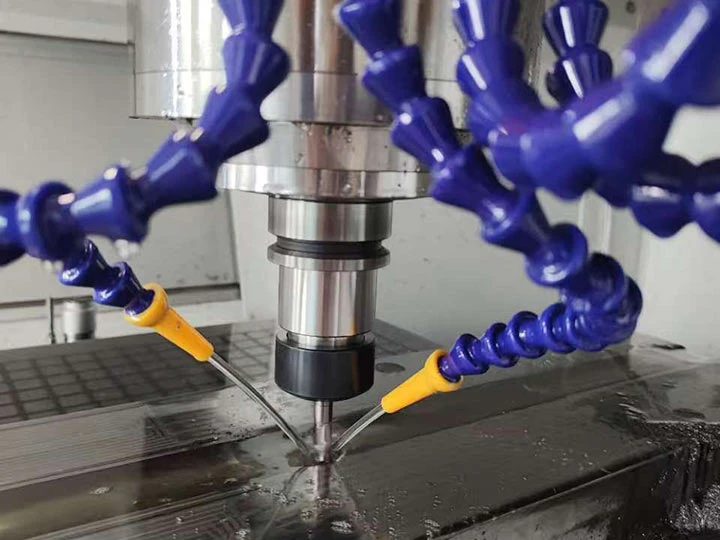
The most common aluminum alloys utilized for precision parts include 6061-T6 (versatile, weldable, good strength), 7075-T6 (high strength, lower corrosion resistance), and 5052 (excellent corrosion resistance, moderate strength). The base material’s composition significantly influences mechanical properties. 6061-T6 comprises approximately 95.8-98.6% aluminum, 0.8-1.2% silicon, 0.25-0.4% magnesium, and trace amounts of copper, iron, and manganese. Manufacturing processes vary depending on the part’s complexity and required volume. CNC machining is frequently employed for achieving tight tolerances and intricate features, involving milling, turning, drilling, and grinding. Casting, including die casting and investment casting, is suitable for high-volume production of complex shapes. Extrusion is utilized to create parts with consistent cross-sections. Critical parameters in machining include cutting speed, feed rate, and coolant selection, impacting surface finish and dimensional accuracy. Heat treatment (e.g., T6 temper) is crucial for enhancing strength and hardness through controlled precipitation of strengthening phases. For casting, mold temperature, injection pressure, and cooling rate are paramount in controlling material solidification and minimizing defects like porosity and shrinkage. Surface treatments like anodizing or powder coating are often applied to improve corrosion resistance and wear properties. Proper material segregation and traceability are essential to prevent alloy mix-ups and ensure consistent performance.
Performance & Engineering
The performance of aluminum precision parts is governed by several engineering principles. Stress analysis, often employing Finite Element Analysis (FEA), is vital for predicting component behavior under load and identifying potential failure points. Factors considered include tensile strength, yield strength, shear strength, and fatigue resistance. Environmental resistance is critical, especially in corrosive environments. Aluminum forms a protective oxide layer, but this can be compromised by chlorides or prolonged exposure to acidic conditions. Anodizing significantly enhances corrosion protection. Compliance requirements vary by industry. Aerospace applications necessitate adherence to standards like AMS 2430 (Aluminum Alloy Solution Heat Treatment), while medical devices must meet ISO 13485 quality management system requirements. Functional implementation dictates specific design considerations. For example, in hydraulic systems, precise surface finish and dimensional accuracy are crucial for sealing performance. In electrical applications, thermal conductivity is paramount for heat dissipation. Creep, the tendency of a material to deform permanently under sustained stress, is a concern at elevated temperatures and must be accounted for in design. Dimensional stability is also important, particularly in precision instruments, where thermal expansion and contraction can affect accuracy. Properly designed features, such as ribs and fillets, can reduce stress concentrations and improve fatigue life.
Technical Specifications
| Alloy | Tensile Strength (MPa) | Yield Strength (MPa) | Elongation (%) | Hardness (Brinell) | Typical Applications |
|---|---|---|---|---|---|
| 6061-T6 | 310 | 276 | 12 | 150 | Structural components, aircraft fittings |
| 7075-T6 | 572 | 503 | 5 | 190 | Aircraft structures, high-strength parts |
| 5052 | 280 | 250 | 22 | 85 | Marine applications, fuel tanks |
| 6063-T5 | 205 | 170 | 20 | 70 | Extrusions, architectural components |
| 2024-T3 | 469 | 331 | 6 | 120 | Aircraft skin, heavily stressed parts |
| 3003 | 170 | 90 | 35 | 45 | Sheet metal work, cookware |
Failure Mode & Maintenance
Aluminum precision parts are susceptible to several failure modes. Fatigue cracking, often initiated at stress concentrations (e.g., holes, sharp corners), occurs under cyclic loading. Corrosion, particularly galvanic corrosion when in contact with dissimilar metals, can significantly reduce strength. Pitting corrosion can initiate at surface imperfections. Fretting corrosion, caused by small amplitude oscillatory movements, generates wear debris that accelerates corrosion. Creep, as mentioned earlier, can lead to dimensional instability at elevated temperatures. Delamination can occur in composite materials incorporating aluminum. Oxidation can form a surface layer, reducing dimensional accuracy and affecting surface finish. Maintenance strategies include regular inspection for cracks, corrosion, and wear. Protective coatings (anodizing, painting) should be maintained to prevent corrosion. Lubrication is essential for components subjected to sliding or rotating motion. Non-destructive testing methods, such as dye penetrant inspection and ultrasonic testing, can detect subsurface cracks. Preventive maintenance schedules should be established based on operating conditions and expected service life. Proper storage in a dry environment is crucial to minimize corrosion. Regular cleaning to remove contaminants can also extend component life. Periodic recalibration is important for precision instruments to ensure accuracy.
Industry FAQ
Q: What is the primary advantage of using 6061-T6 aluminum over steel for a structural component?
A: The primary advantage lies in its significantly higher strength-to-weight ratio. 6061-T6 aluminum offers comparable strength to many steels, but at approximately one-third the weight. This reduces overall system weight, improving performance and fuel efficiency, especially in applications like aerospace and automotive. Furthermore, aluminum offers superior corrosion resistance in many environments.
Q: How does the machining process affect the surface finish of an aluminum precision part, and why is this important?
A: The machining process significantly impacts surface finish, determined by factors like cutting speed, feed rate, tool geometry, and coolant. A rougher surface finish increases friction, reduces wear resistance, and can create stress concentrations. For applications requiring tight seals or precise alignment, a smooth surface finish is crucial for optimal performance and longevity.
Q: What are the common methods for preventing corrosion in aluminum parts used in marine environments?
A: Anodizing is the most common method, forming a thick, protective oxide layer. The use of sacrificial anodes, typically made of zinc, provides cathodic protection. Applying protective coatings, such as epoxy paints, creates a barrier against corrosive elements. Selecting alloys with higher corrosion resistance, like 5052, is also a key strategy.
Q: What considerations are important when designing aluminum parts for welding?
A: Aluminum’s high thermal conductivity requires preheating to prevent rapid cooling and cracking. Filler metal selection is crucial, matching the base metal’s composition. Shielding gas (typically argon) is essential to prevent oxidation during welding. Joint design should minimize stress concentrations and ensure adequate penetration. Post-weld heat treatment can relieve residual stresses.
Q: What are the implications of porosity in an aluminum casting?
A: Porosity – the presence of voids within the casting – weakens the material, reducing tensile strength, fatigue resistance, and pressure tightness. It can be caused by trapped gases, shrinkage during solidification, or insufficient venting. Minimizing porosity requires careful control of casting parameters like mold temperature, pouring rate, and degassing procedures.
Conclusion
Aluminum precision parts are indispensable across numerous industries, driven by a unique combination of strength, weight, and corrosion resistance. Successful implementation hinges on a thorough understanding of material science, precise manufacturing control, and diligent attention to performance engineering principles. Alloy selection dictates the core mechanical properties, while manufacturing processes like machining and casting determine dimensional accuracy and surface finish.
Future trends involve advanced manufacturing techniques like additive manufacturing (3D printing) to create complex geometries and reduce material waste. Continued development of high-strength, corrosion-resistant alloys will further expand the applications of aluminum precision parts. Maintaining rigorous quality control and adhering to evolving industry standards remains paramount for ensuring the reliability and longevity of these critical components.