
Introduction
Aluminum countersunk washers are fastening components designed to distribute load over a wider area, preventing damage to the fastened material. They feature a countersunk hole, allowing the head of a screw or bolt to sit flush with the surface. Predominantly utilized in aerospace, automotive, and structural applications, these washers provide a secure and aesthetically pleasing fastening solution. Their material composition – typically aluminum alloys – offers a favorable strength-to-weight ratio and inherent corrosion resistance, crucial in demanding environments. The primary function extends beyond simple load distribution; aluminum countersunk washers contribute to joint integrity by reducing stress concentrations and minimizing the risk of surface indentation, particularly when securing delicate or coated materials. Critical performance attributes include shear strength, tensile strength, and corrosion resistance, all directly influencing their suitability for specific applications. The selection of the appropriate alloy and manufacturing process is paramount to achieving optimal performance.
Material Science & Manufacturing
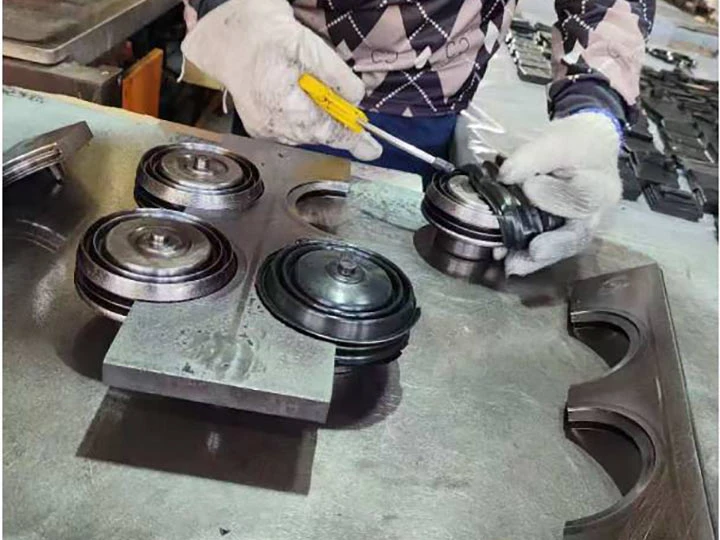
Aluminum countersunk washers are typically manufactured from aluminum alloys in the 5000 and 6000 series, specifically alloys like 5052, 6061, and 7075. 5052 aluminum alloy offers excellent corrosion resistance, particularly in marine environments, due to its high magnesium content. 6061 aluminum alloy is known for its weldability and machinability, making it ideal for complex washer designs. 7075 aluminum alloy provides the highest strength but exhibits lower corrosion resistance and is often anodized for protection. The manufacturing process commonly involves cold heading, a process where a wire is fed into a die and formed into the desired washer shape using compressive forces. This process improves the material's grain structure, enhancing strength. Following cold heading, the washers undergo machining operations, including drilling the countersunk hole and achieving the final dimensions. Heat treatment, such as T6 temper, is often applied to 6061 and 7075 alloys to increase strength and hardness. Quality control is critical, encompassing dimensional checks, material composition verification via spectrographic analysis, and hardness testing (Rockwell B or C scale). Chemical compatibility must be considered; prolonged exposure to strong acids or bases can compromise the alloy’s integrity. Microstructural analysis reveals the grain size and distribution, indicators of manufacturing quality and potential fatigue resistance.
Performance & Engineering
The performance of aluminum countersunk washers is heavily influenced by load distribution and shear stress. The countersunk design minimizes stress concentration at the point of contact between the fastener and the substrate. Force analysis considers both the clamping force exerted by the fastener and the distributed load applied to the washer. Finite Element Analysis (FEA) is routinely employed to model stress distribution and optimize washer geometry for specific applications. Environmental resistance, particularly corrosion resistance, is crucial. Aluminum forms a protective oxide layer; however, this layer can be compromised in saline environments or in the presence of dissimilar metals, leading to galvanic corrosion. Anodizing significantly enhances corrosion resistance by thickening the oxide layer. Compliance requirements, such as those specified by aerospace standards (AMS standards), dictate material specifications, dimensional tolerances, and performance testing protocols. For example, AMS-R-6061 specifies the requirements for 6061 aluminum alloy. Furthermore, fatigue life is a critical consideration in applications subject to cyclic loading. Washers must withstand repeated stress cycles without failure, necessitating careful material selection and manufacturing control. The washer’s thickness and diameter directly impact its load-carrying capacity and resistance to bending.
Technical Specifications
| Alloy | Tensile Strength (MPa) | Shear Strength (MPa) | Hardness (Rockwell B) |
|---|---|---|---|
| 5052-H32 | 276 | 172 | 60-70 |
| 6061-T6 | 310 | 193 | 75-85 |
| 7075-T6 | 572 | 386 | 85-95 |
| Diameter (mm) | 6.35 | 8.73 | 12.70 |
| Thickness (mm) | 1.0 | 1.5 | 2.0 |
| Hole Diameter (mm) | 4.3 | 6.6 | 9.5 |
Failure Mode & Maintenance
Aluminum countersunk washers are susceptible to several failure modes. Fatigue cracking, induced by cyclic loading, is a common issue, particularly in high-stress applications. This typically initiates at the countersunk hole due to stress concentration. Galvanic corrosion, as previously mentioned, can occur when aluminum is in contact with dissimilar metals in a corrosive environment. Creep, the slow deformation of the washer under sustained load, can lead to loss of clamping force over time, especially at elevated temperatures. Pitting corrosion, caused by localized defects in the oxide layer, can also initiate corrosion. Maintenance primarily focuses on preventative measures. Regular inspection for signs of corrosion, cracking, or deformation is crucial. Applying a protective coating, such as a corrosion inhibitor, can extend the washer’s service life. In applications exposed to harsh environments, periodic replacement of washers is recommended. Proper torque control during installation is essential to prevent over-tightening, which can lead to washer distortion and premature failure. If galvanic corrosion is suspected, isolating the aluminum washer from the dissimilar metal using a non-conductive barrier is recommended. Failure analysis should include metallurgical examination to determine the root cause of failure and prevent recurrence.
Industry FAQ
Q: What is the impact of anodizing on the performance of aluminum countersunk washers?
A: Anodizing significantly enhances the corrosion resistance of aluminum countersunk washers by creating a thicker, more durable oxide layer. This layer acts as a barrier, preventing corrosive agents from reaching the aluminum substrate. Anodizing also increases the surface hardness, improving wear resistance. However, it’s crucial to ensure the anodizing process is performed correctly to avoid cracking or porosity in the oxide layer, which could compromise its protective properties.
Q: How does the choice of aluminum alloy affect the fatigue life of the washer?
A: The alloy’s composition and heat treatment directly impact fatigue life. Alloys with higher tensile strength, such as 7075-T6, generally exhibit better fatigue resistance than lower-strength alloys like 5052-H32, but they are more susceptible to stress corrosion cracking. Proper heat treatment is crucial; T6 temper provides an optimal balance of strength and ductility for fatigue applications. Minimizing surface imperfections during manufacturing also enhances fatigue life.
Q: What are the considerations when using aluminum washers with steel fasteners?
A: Using aluminum washers with steel fasteners creates a galvanic corrosion risk. Steel is more noble than aluminum, meaning it will corrode the aluminum preferentially in the presence of an electrolyte (e.g., moisture). To mitigate this, consider using a barrier coating, such as zinc or cadmium plating on the steel fastener, or utilizing a non-conductive washer between the aluminum and steel. Regular inspection for signs of corrosion is also recommended.
Q: What torque values are recommended for aluminum countersunk washers?
A: Torque values depend on the washer diameter, material, and the thread size of the fastener. It is critical to consult the fastener manufacturer's specifications or relevant engineering standards. Over-tightening can distort the washer and damage the fastened material, while under-tightening can lead to insufficient clamping force. Using a calibrated torque wrench is essential for accurate torque application.
Q: How do dimensional tolerances impact the performance of these washers?
A: Precise dimensional tolerances are critical for ensuring proper fit and load distribution. Variations in thickness or hole diameter can affect clamping force and introduce stress concentrations. Tighter tolerances, as specified by aerospace standards (e.g., AMS standards), are required for critical applications. Dimensional control during manufacturing, using calibrated measuring instruments, is therefore essential.
Conclusion
Aluminum countersunk washers are vital components in numerous engineering applications, offering a lightweight, corrosion-resistant fastening solution. Their performance is dictated by a complex interplay of material science, manufacturing processes, and engineering considerations. The selection of the appropriate aluminum alloy, coupled with precise manufacturing control and adherence to industry standards, is paramount to achieving optimal performance and ensuring long-term reliability.
Future developments may focus on advanced surface treatments, such as plasma electrolytic oxidation (PEO), to further enhance corrosion resistance and wear properties. The integration of predictive maintenance strategies, utilizing sensor technology to monitor washer stress and corrosion levels, could also become increasingly prevalent. Ultimately, a thorough understanding of the underlying principles governing aluminum countersunk washer behavior is essential for engineers and procurement professionals alike.