
Introduction
50mm metal washers are annular components utilized in mechanical assemblies to distribute load, prevent damage to mating surfaces, and provide spacing. Positioned within the broader fastening industry, these washers function as critical elements alongside bolts, screws, and nuts. Their 50mm outer diameter is a common size employed across diverse industries, including automotive, construction, aerospace, and general manufacturing. Core performance characteristics encompass load-bearing capacity, resistance to deformation, and material compatibility with the fastened components and environmental factors. The selection of an appropriate washer material and design is paramount to ensure long-term joint integrity and prevent premature failure. A key industry pain point is optimizing washer performance for specific application stresses, particularly in dynamic loading scenarios, and consistently meeting stringent industry standards concerning material traceability and mechanical properties.
Material Science & Manufacturing
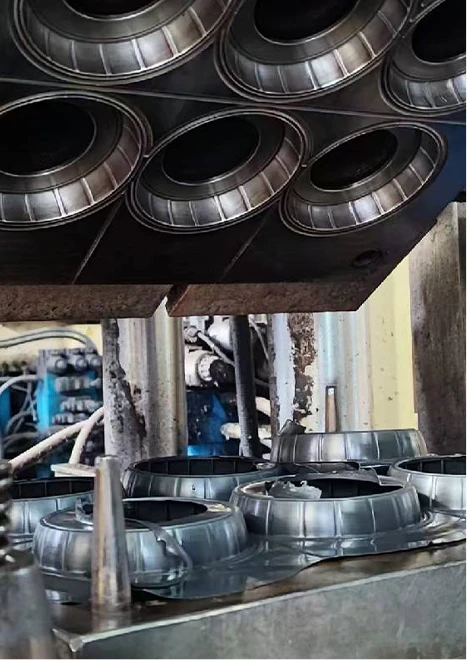
Common materials for 50mm metal washers include carbon steel (various grades – 1008, 1018, C45), stainless steel (304, 316, 410), aluminum alloys (6061-T6), and occasionally, high-strength alloy steels. Carbon steel offers high strength and cost-effectiveness but is susceptible to corrosion. Stainless steel provides excellent corrosion resistance but is generally more expensive. Aluminum alloys offer a good strength-to-weight ratio and corrosion resistance. The manufacturing process typically involves stamping from coil stock or machining from bar stock, depending on the material, quantity, and required precision. Stamping is ideal for high-volume production, employing progressive dies to create the washer shape. Key parameters include die sharpness, stamping pressure, and material thickness. Machining offers greater dimensional accuracy and the ability to create washers with specific features, but at a higher cost. Heat treatment, such as hardening and tempering, may be employed to enhance the mechanical properties of carbon steel washers. Surface treatments, including zinc plating, black oxide coating, or passivation (for stainless steel), are often applied to improve corrosion resistance and aesthetic appeal. Material chemical composition is strictly controlled to meet relevant ASTM standards, and dimensional accuracy is verified through precision measurement tools, including calipers and micrometers.
Performance & Engineering
Performance of 50mm metal washers is primarily defined by their load-bearing capacity, resistance to deformation (both permanent and elastic), and resistance to environmental degradation. Force analysis involves calculating the stress concentration at the washer’s inner diameter and under the bolt head or nut. The washer's ability to distribute load effectively reduces stress on the fastened components. Finite Element Analysis (FEA) is frequently used to model stress distribution under various loading conditions, including static, dynamic, and fatigue loads. Environmental resistance is crucial, especially in corrosive environments. Stainless steel washers are preferred in such applications. Galvanic corrosion can occur when dissimilar metals are in contact, necessitating careful material selection or the use of insulating coatings. Compliance requirements depend on the specific application. For example, aerospace applications require washers to meet stringent AS9100 standards, ensuring traceability and rigorous quality control. The washer’s hardness, typically measured using Rockwell or Vickers hardness tests, is a critical parameter. Proper washer selection ensures adequate clamping force and prevents loosening of the bolted joint due to vibration or thermal cycling. The spring rate of the washer (its resistance to compression) also plays a role in maintaining clamping force over time.
Technical Specifications
| Parameter | Carbon Steel (1018) | Stainless Steel (304) | Aluminum Alloy (6061-T6) | Units |
|---|---|---|---|---|
| Outer Diameter | 50.0 ± 0.1 | 50.0 ± 0.1 | 50.0 ± 0.1 | mm |
| Inner Diameter | 8.0 ± 0.1 | 8.0 ± 0.1 | 8.0 ± 0.1 | mm |
| Thickness | 2.0 ± 0.1 | 1.5 ± 0.1 | 2.5 ± 0.1 | mm |
| Hardness (Rockwell C) | 30-40 | 85-95 | 80-90 | - |
| Tensile Strength | 570 | 500 | 310 | MPa |
| Yield Strength | 370 | 210 | 275 | MPa |
Failure Mode & Maintenance
Common failure modes for 50mm metal washers include fatigue cracking (due to cyclical loading), corrosion (particularly in carbon steel washers exposed to harsh environments), deformation (yielding or permanent set under excessive load), and fracture (sudden breakage due to overload or material defects). Fatigue cracking typically initiates at stress concentration points, such as the inner diameter. Corrosion manifests as rust formation on carbon steel or pitting corrosion on stainless steel. Deformation results in a loss of clamping force and can lead to joint loosening. Failure analysis often involves microscopic examination of fracture surfaces to identify the root cause. Maintenance primarily focuses on periodic inspection of bolted joints to detect signs of corrosion, deformation, or loosening. Replacing washers exhibiting signs of degradation is crucial to prevent catastrophic failure. Applying appropriate lubricants can reduce friction and wear, extending the lifespan of the washer and the fastened joint. In corrosive environments, regular cleaning and the application of protective coatings can mitigate corrosion. Proper torque control during installation is also essential to prevent over-tightening, which can lead to deformation or thread damage.
Industry FAQ
Q: What is the impact of washer material on the long-term reliability of a bolted joint in a marine environment?
A: In marine environments, corrosion is a significant concern. Carbon steel washers will corrode rapidly, leading to loss of clamping force and potential joint failure. Stainless steel (316) washers are highly recommended due to their superior corrosion resistance. However, even 316 stainless steel can experience pitting corrosion in highly saline environments. Selecting a washer material compatible with the bolt and nut material to minimize galvanic corrosion is also critical.
Q: How does the thickness of a 50mm washer affect its performance under high loads?
A: Increasing washer thickness generally increases its load-bearing capacity and resistance to deformation. A thicker washer distributes the load over a larger area, reducing stress concentration. However, there's a point of diminishing returns. Excessive thickness can increase weight and potentially interfere with the assembly. The optimal thickness depends on the specific application and load requirements, calculated through engineering analysis.
Q: What are the key differences between hardened and unhardened carbon steel washers, and when should each be used?
A: Hardened carbon steel washers exhibit higher hardness and yield strength compared to unhardened washers. This makes them more resistant to deformation and wear. Hardened washers are suitable for applications involving high loads, dynamic loading, or abrasive environments. Unhardened washers are sufficient for less demanding applications where deformation is not a primary concern and cost is a significant factor.
Q: Can using a washer with an incorrect inner diameter negatively impact the performance of a bolted joint?
A: Yes. An inner diameter that is too large allows excessive movement of the bolt head or nut, reducing clamping force and potentially leading to loosening. An inner diameter that is too small can cause stress concentration around the hole, increasing the risk of washer failure. Precise matching of the washer's inner diameter to the bolt or nut size is essential.
Q: What quality control measures are typically implemented to ensure the consistency of 50mm metal washers?
A: Typical quality control measures include dimensional inspection (using calipers, micrometers, and optical comparators), hardness testing (Rockwell or Vickers), material certification (verifying chemical composition), visual inspection for defects (such as cracks or burrs), and coating thickness measurement (if applicable). Statistical Process Control (SPC) is often used to monitor manufacturing processes and ensure consistency.
Conclusion
50mm metal washers, while seemingly simple components, play a crucial role in the integrity and longevity of bolted joints across numerous industries. Their performance is dictated by a complex interplay of material selection, manufacturing processes, and engineering considerations. Selecting the appropriate washer material and ensuring adherence to relevant industry standards are paramount to prevent premature failure and maintain structural reliability. The potential failure modes—ranging from corrosion and fatigue to deformation and fracture—require a thorough understanding to implement effective preventative maintenance strategies.
Future development in washer technology is likely to focus on advanced materials (such as high-strength alloys and composites), innovative surface treatments for enhanced corrosion resistance, and the integration of smart features (such as embedded sensors for monitoring clamping force). Optimizing washer design through FEA and employing rigorous quality control measures will remain essential to meet the evolving demands of demanding engineering applications. Understanding these technical nuances ensures optimal performance and cost-effectiveness in critical fastening systems.